How To Improve Vitamin D In Your Body

How To Improve Vitamin D In Your Body

  • 10 Tips to Increase Vitamin D
    • What are the ten effective ways to increase vitamin D levels?
  • How Much Is Needed?
    • How much vitamin D does a body require?
  • Center
    • Ten Effective Ways to Increase Vitamin D Intake Center

Ways to Increase Your Vitamin D Levels

Ways to Increase Your Vitamin D Levels

Vitamin D is an essential nutrient that is required to maintain strong bones and muscles. Chronic vitamin D deficiency in adults results in osteoporosis, osteomalacia, muscle weakness, and increased risk of falls. This fat-soluble vitamin primarily aids in calcium absorption, bone growth, and mineralization. It is also involved in the working of the immune system, digestion, heart function, etc. Research suggests that vitamin D may help prevent various illnesses, such as rheumatoid arthritis, systemic lupus erythematosus, psoriasis, Type 1 diabetes, multiple sclerosis, cancer, and heart disease. However, the relationship of vitamin D with these conditions is still poorly understood.

What are the ten effective ways to increase vitamin D levels?

Vitamin D is an essential nutrient that is not received adequately by many people worldwide. Below are ten common effective ways to increase vitamin D levels in the body:

  • Sunlight: Vitamin D is often referred to as "the sunshine vitamin." Our skin hosts a type of cholesterol that makes Vitamin D in the presence of sunlight. However, the amount of vitamin D your body can make depends on several parameters like your skin tone, the exposed part of the body, age, etc. Reasonable exposure in sun from 1000 hours to 1500 hours is an excellent way to maintain the body's Vitamin D Levels.
  • Seafood: Fatty fish and seafood are among the richest natural food sources of vitamin D. Many kinds of seafood are also rich in heart-healthy omega-3 fatty acids (tuna, rainbow trout, mackerel, oysters, salmons, sardines, and anchovies).
  • Mushrooms: Mushrooms are the only completely plant-based source of vitamin D. Like humans, mushrooms can make their own vitamin D upon exposure to UV light. Humans produce a form of vitamin D3 (cholecalciferol}, whereas mushrooms produce D2 (ergocalciferol). However, one should always purchase them from a trusted supplier such as a grocery store or farmers market to avoid exposure to poisonous varieties. Shiitake mushrooms particularly are recommended for vitamin D content.
  • Egg yolks: Egg yolks are a common source of vitamin D that can be easily added to the routine diet.
  • Fortified foods: Vitamin D may be added to certain foods to increase their nutritive value. This process is called fortification. Some common vitamin D fortified goods include:
    • soy, almond, and hemp milk
    • orange juice
    • ready-to-eat cereals
    • certain types of yogurt
    • tofu
  • Dairy foods: Dairy products like swiss cheese, cow milk, curds, cottage cheese are also good Vitamin D sources.
  • A tablespoon of cod liver oil contains 1360 international units of vitamin D. Consumption of cod liver oil with warm water or taking cod liver oil capsules may enhance vitamin D levels.
  • Supplements: For many people, taking a vitamin D supplement may be the best way to ensure adequate intake. Vitamin D exists in two main biological forms: D2 (ergocalciferol) and D3 (cholecalciferol). Typically, D2 comes from plants and D3 from animals. Research suggests that D3 may be significantly more effective at raising and maintaining overall vitamin D levels than D2, so a supplement with this form may help in maintaining vitamin D levels in the body. Additionally, it is important to purchase high-quality supplements that have been independently tested.
  • Ultraviolet (UV) lamp: Lamps that emit UV-B radiation may also boost vitamin D levels. When skin is exposed to UV-B radiation from the sun, it's able to produce its own vitamin D. UV lamps mimic the action of the sun and can be especially helpful if your sun exposure is limited because of geography or time indoors. UV radiation has been used therapeutically for various skin conditions for decades, but recently, it has been marketed as a way to improve vitamin D levels. Too much exposure may burn the skin. It is recommended to limit the exposure to no more than 15 minutes at a time.
  • Daily exercise: Research has proved that people engaging in regular physical activity like walking, jogging, cycling have better Vitamin D levels.

How much vitamin D does a body require?

Usually, 1,000-4,000 IU is considered a safe daily dose for maintaining healthy levels of vitamin D. However, people may need much larger doses especially if their current levels are very low or they have limited exposure to sunlight. The optimal blood level of vitamin D is not concretely established but likely falls between 20 and 50 ng/mL. Calcium supplementation along with Vitamin D consumption is essential for structurally strong bones and muscles.

There is a significant debate about how much vitamin D is needed by the body.

  • As per U.S. National Academy of Medicine: 600-800 IU of daily vitamin D is considered to be sufficient for the majority of the population. The U.S. National Academy of Medicine further suggests that a daily intake of up to 4,000 IU of vitamin D is safe for most people, although much higher doses may be temporarily necessary to raise blood levels in some individuals.
  • As per U.S. Endocrine Society: 1,500-2,000 IU per day is required for the body.
  • As per the Reference Daily Intake: 600-800 IU of vitamin D is recommended for adults.
  • Daily consumption of more than 4,000 IU is not recommended, as it may be toxic to the body.

SLIDESHOW

The 14 Most Common Causes of Fatigue See Slideshow

Medically Reviewed on 8/20/2020

References

https://ods.od.nih.gov/factsheets/Vitamin%20D-HealthProfessional/

https://emedicine.medscape.com/article/128762-medication

https://www.webmd.com/vitamins-and-supplements/ss/slideshow-vitamin-d-overview

https://www.ncbi.nlm.nih.gov/pmc/articles/PMC2835491/

How To Improve Vitamin D In Your Body

Source: https://www.medicinenet.com/ten_effective_ways_to_increase_vitamin_d_intake/article.htm

Share:

Vitamin D For Perimenopause

Vitamin D For Perimenopause

Share on Pinterest
Experts are researching if vitamin D deficiency is linked to severe COVID-19 symptoms. Jasmin Merdan / Getty Images
  • Several studies have linked vitamin D deficiency to coronavirus infection and more severe COVID-19.
  • Experts are now investigating if taking vitamin D may help protect against severe COVID-19 symptoms.
  • Even before these studies are finished, there are good reasons to consider taking a vitamin D supplement.

All data and statistics are based on publicly available data at the time of publication. Some information may be out of date. Visit our coronavirus hub and follow our live updates page for the most recent information on the COVID-19 pandemic.

With no coronavirus vaccines approved for full use, many people are turning to vitamins and other supplements to bolster their immune system and help them fight off COVID-19.

While plenty of posts on social media push these supplements as personal coronavirus shields, Dr. Anthony Fauci, director of the National Institute of Allergy and Infectious Diseases, cautioned last month that most "so-called immune boosting supplements" actually do "nothing."

However, there is one supplement that may be of use to the immune system — vitamin D, also known as the "sunshine vitamin."

"If you are deficient in vitamin D, that does have an impact on your susceptibility to infection," Fauci said in an Instagram Live interview with actress Jennifer Garner. "So I would not mind recommending — and I do it myself — taking vitamin D supplements."

Fauci was not speaking about COVID-19 specifically, but about vitamin D's general role in supporting the immune system — in particular, about the benefits of this nutrient for people who are deficient.

Right now, the National Institutes of Health says there's not enough evidence to show that vitamin D can prevent or treat COVID-19.

But there is enough evidence that scientists are exploring the benefits of this and other supplements against the coronavirus.

Earlier research showed that vitamin D reduces the risk of respiratory tract infections other than COVID-19. The benefits varied quite a bit among these studies, but vitamin D supplementation seemed to be more helpful for people who were deficient in this nutrient.

More recent research suggests that vitamin D deficiency may increase the risk of coronavirus infection and severity of COVID-19.

For example, some studies found that COVID-19 deaths tend to be higher in countries farther away from the equator, where many people are deficient in vitamin D due to the reduced amount of sunlight, especially during winter.

"We make vitamin D by being exposed to sunlight, and in the colder months people can become deficient," said Nicole Avena, PhD, an assistant professor of neuroscience at the Icahn School of Medicine at Mount Sinai in New York.

Many factors could account for the greater number of COVID-19 cases in more northerly latitudes. But a study published last month in JAMA Network Open reinforces the importance of vitamin D for a healthy immune system.

"In our study, patients who have lower vitamin D levels were more likely to test positive for COVID-19," said study author Dr. David Meltzer, a professor of medicine at The University of Chicago Medicine.

This trend still held when they tried to control for other factors — age, obesity, other medical conditions — that might worsen COVID-19 and are linked to lower vitamin D levels.

Other studies show that patients with lower vitamin D levels who are diagnosed with COVID-19 tend to have worse outcomes.

One of these was published last month in PLoS ONE. Researchers found that people hospitalized for COVID-19 who were deficient in vitamin D were more likely to have severe symptoms or die from COVID-19.

Not all research, though, supports the link between vitamin D and COVID-19.

A UK biobank study published earlier this year in Diabetes & Metabolic Syndrome: Clinical Research & Reviews found no link between vitamin D levels and coronavirus infection.

However, Meltzer and his colleagues pointed out in their paper that the UK researchers measured vitamin D levels up to 14 years before COVID-19 testing and didn't look at whether people had been treated with vitamin D since then.

This could have weakened the observed link between vitamin D levels and coronavirus infection, they wrote.

Scientists are also eyeing other nutrients as potential treatments for COVID-19, including zinc and vitamin C, both touted for their cold-fighting benefits.

In one study, researchers from Spain reported that patients with low blood levels of zinc were more likely to die from COVID-19.

Their results were presented last week at the European Society of Clinical Microbiology and Infectious Disease (ESCMID) Conference on Coronavirus Disease. This research has not been peer-reviewed, so it should be viewed with some caution.

All of these studies are observational, meaning researchers collected data on people over time, rather than assigning people to different treatments. That makes it impossible to show a cause-and-effect relationship between vitamin D and COVID-19.

What's needed are randomized controlled trials (RCTs), the "gold standard" of clinical research. Some of these are already underway.

In one study carried out in Spain, researchers gave calcifediol, an active form of vitamin D, to 50 people hospitalized with COVID-19. Another group of 26 patients didn't receive vitamin D.

All patients were treated equally with hydroxychloroquine and azithromycin.

Only one of the patients treated with vitamin D ended up in the intensive care unit, while half of the untreated patients did.

"There are some imperfections [to the study] — it's not a very large study, there are some slight imbalances between the groups — but it's pretty impressive," said Meltzer.

While this study used vitamin D to treat people who already had COVID-19, Meltzer says the nutrient might work equally well at keeping people out of the hospital.

"One possibility is that vitamin D is not preventing COVID-19," he said, "but is causing people who are infected to have such minimal symptoms that they never get tested, never get found."

More research is needed to know if this is true.

Two randomized controlled trials starting at the University of Chicago should provide some answers. In both, people will be treated with vitamin D and then followed to see if they contract the coronavirus and how severe their symptoms are.

One trial focuses on healthcare workers. The other will recruit people from the community, with an emphasis on enrolling Black and Hispanic people, who are at high risk for both vitamin D deficiency and COVID-19.

At the Cleveland Clinic, researchers are enrolling people into a study to see if vitamin C or zinc — or a combination of the two — can reduce the duration of COVID-19 symptoms. Patients will be given the supplements after they have tested positive for COVID-19.

How soon results are available from these studies depends on how quickly researchers can enroll people into the studies. Meltzer says study volunteers are essential for the success of COVID-19 research.

"People who can enter clinical trials do a tremendous service to society," he said.

Although Meltzer is enthusiastic about the potential benefits of vitamin D, he cautions that we won't really know until the randomized controlled trials are finished.

"This doesn't mean we should let down our guard or not do any of the other things we're doing," he said. "I certainly wouldn't stop wearing a mask and go to a big party thinking everything was going to be OK because I was taking vitamin D."

Even before these studies are finished, there are good reasons to consider taking a vitamin D supplement.

"The vast majority of Americans are vitamin D deficient and could probably benefit from some modest level of vitamin D supplementation, at very little risk," said Meltzer.

In the United States, an estimated 41 percent of adults are deficient in vitamin D. People with darker skin are at greater risk — 63 percent of Hispanic people and 82 percent of Black people have low vitamin D levels.

Other factors increase the risk of vitamin D deficiency, including age, limited sun exposure, obesity, and certain medical conditions.

Avena says it is difficult to get enough vitamin D from foods. "So taking a supplement may be advised," she says, "but always check with your doctor first."

Meltzer says he takes 4,000 international units (IU) per day. The National Institutes of Health says this is the upper limit of what is safe for the vast majority of people.

"Don't consume more than 4,000 IU per day of vitamin D without your doctor's permission," said Avena. "It exceeds the safe upper limits of intake."

Larger doses can be toxic and should only be taken under medical supervision.

Avena says zinc may also be helpful once you feel symptoms of a cold coming on.

She recommends taking between 13.3 milligrams and 23 milligrams of zinc every 2 hours while you have cold symptoms, but no longer than 1 week. This is the dose found in over-the-counter gummies and lozenges.

As with vitamin D, we don't yet know if zinc will reduce symptoms of COVID-19.

While most people get enough zinc from food sources, some groups — vegetarians, people with gastrointestinal diseases, people who misuse alcohol — are at higher risk of zinc deficiency and might want to consider taking a supplement.

Vitamin D For Perimenopause

Source: https://www.healthline.com/health-news/what-to-know-about-vitamin-d-and-covid-19

Share:

Where Do We Get Vitamin D From

Where Do We Get Vitamin D From

Dungeons and Dragons 101: How Has D&D Endured for Almost 50 Years?

Photo Courtesy: Simon Hayter/Toronto Star/Getty Images

Dungeons and Dragons has become so popular that pretty much everyone has heard of it, even if they've never actually played it. The popular role-playing game (RPG) first made its debut almost 50 years ago, back in 1974, and has since become one of the most — if not the most — popular tabletop fantasy games in the world.

These days, you can even play D&D  online and connect with other players over popular chat platforms like Discord. If you're curious to know what the game is all about — and how it has managed to stay popular for so long — join us for a crash course, Dungeons and Dragons 101.

The Humble Origins of the World's Most Epic RPG

The revolution that would eventually become Dungeons & Dragons owes its origins to a fateful meeting between two war-game fans named Gary Gygax and Dave Arneson. It all began with an earlier game called Chainmail, which was written by Gary Gygax and a friend of his, Jeff Perren. Chainmail was a medieval-themed combat game and included a 14-page write-up that detailed how players could incorporate fantasy elements into the gameplay.

Chainmail made its way to Dave Arneson, who decided to use the fantasy rules section to develop a game of his own,Blackmoor. By combining the elements of Chainmail and several other games, Arneson developed a Lord of the Rings-style game universe where players could engage in epic battles as they explored underground dungeons and vast lore.

 Photo Courtesy: Monty Brinton/CBS/Getty Images

In 1972, Arneson introduced Gygax to Blackmoor  — and he was immediately blown away. Ultimately, Arneson and Gygax formed a partnership and developed a new game: Dungeons & Dragons. The RPG was first distributed in 1974 by Tactical Studies Rules (TSR), a company that Gygax formed himself after struggling to find a publisher.

That year, the first 1,000 copies of the D&D box set — most of which were hand-assembled — sold for $10. Eventually, Dungeons & Dragons became more than just an innovative, fantasy-fueled idea, exploding into a bonafide phenomenon. As a result, TSR was purchased by Hasbro's Wizards of the Coast, the game's current publisher, in 1997.

What Makes D&D So Great, Anyway?

If you've never played Dungeons & Dragons yourself, you may have found yourself wondering what all the hype is about. This tends to be especially true given the notorious enthusiasm for the game that D&D tends to inspire among its fans. So, how exactly does Dungeons & Dragons work, and, in a world full of tabletop games and RPGs, why has it endured for nearly 50 years?

 Photo Courtesy: Daniel Knighton/FilmMagic/Getty Images

One of the key reasons for  D&D 's popularity? It hinges on imagination. No matter how old you may be, the game invites you to partake in an epic exercise in make-believe, one that features heroes, monsters, battles, and plenty of adventure. Unlike the average game of make-believe, however, D&D  provides just enough framework, so that every game is not only structured, but equal parts chance and strategy.

When you start the game, you invent a character and take on their role. You can choose to become a fighter, a wizard, a cleric, or a rogue, for example. Part of the fun? Creating a whole personality, appearance, set of skills, and backstory for the character you decide to play. Using a combination of character sheets, the Player's Handbook. and your own imagination, the possibilities are nearly endless.

One player takes on the role of the Dungeon Master, the person responsible for running the game and keeping the story on track.By using an adventure book, the Dungeon Master can lead the players (and their characters) through a variety of storylines, leaving each player to decide on their reaction to the circumstances that arise. As you may know, a dice-throwing system is used to determine whether the player's strategy turns out to be a success or failure, thus emphasizing that great balance of chance and strategy.

An Endless World of Adventure

"Why did it catch on so quickly? Because it offered almost pure escapism and the ability, in the game, to do anything and everything you wanted to do!" Arneson once said in Different Worlds. "Gads! Who wouldn't get hooked on game-playing nirvana like that after years of charts, tables, painting figures, etc."

In an industry that had previously been composed of games played with miniature figurines, Dungeons & Dragons offered players the chance to use their creativity like never before. By relying heavily on the imagination and contributions of each player, the game more or less offered players the chance to write their own fantasy epic.

 Photo Courtesy: Danielle Donders/Getty Images

Take, for example,Robert Wardhaugh, a player who started a game of D&D  as a teenager in 1982. As of 2020, the game is still going, which means it has lasted a whopping 38 years. Of course, not all D&D  games last that long, but that's part of the beauty of it all — it can be what you make it.

When you sit down to start your adventure, you can conjure up a fantasy scenario that plays out for as short or as long a period as you'd like. Nowadays, there are even whole leagues and conventions where D&D fans can connect to combine their creativity and produce more exciting adventures.

D&D Goes Digital

While it's technically been possible to play Dungeons & Dragons online for some time, there was once a time when it was a bit more of a chore. Recently, however, the company has released more tools that make online gaming much easier.This became especially true during the COVID-19 pandemic, since players couldn't gather in a physical space. Thanks to these online methods of connecting, the game enjoyed a 33% sales increase during 2020, with both new and veteran players alike gathering virtually for some solid escapism and fun.

 Photo Courtesy: CasarsaGuru/Getty Images

The online option is also a great way for new players to get started. Instead of searching for players in your area, simply check out D&D Beyond, which has made online gameplay easier than ever before. There you'll find a virtual character builder, free access to game rules, and even virtual dice-rolling capabilities. Additionally, t he folks behind D&D have also created a handy beginners' guide capable of teaching you everything you need to know so that you can create your character and embark on your first quest with ease.

As you'll soon discover, a whole subculture has risen up around the world of Dungeons & Dragons over the years — and it doesn't appear to be going anywhere. So, if you're looking to meet new friends and flex your imagination, why not roll the dice?

Where Do We Get Vitamin D From

Source: https://www.ask.com/culture/dungeons-and-dragons-101?utm_content=params%3Ao%3D740004%26ad%3DdirN%26qo%3DserpIndex

Share:

Vitamin D 10

Vitamin D 10

Vitamin D Facts: Everything You Need to Know

Medically Reviewed by Dr Samantha Miller, MBChB

Photo Courtesy: Justin Paget/DigitalVision/Getty Images

Vitamin D is important for maintaining a healthy body, primarily because it helps you fully maximize your body's absorption and utilization of calcium, an important mineral that we all need. When paired with calcium, vitamin D helps regulate bone remodeling and growth, ensuring healthy, strong bones. Vitamin D can also help protect older adults from osteoporosis, which occurs due to excess bone loss from aging.

Furthermore, this nutrient boosts your immune system and reduces inflammation within your body, potentially warding off future medical conditions in the process. It also plays a vital role in cell growth, neuromuscular functions and protein encoding. Studies have shown that a regular, healthy vitamin D intake can also serve as an antidepressant and make people feel generally happier. But that's not all you'll want to know about vitamin D.

Sources of Vitamin D

Vitamin D is naturally found in certain foods and now appears in many more foods that have been fortified with added nutrients. The best sources of naturally occurring vitamin D are oily fish such as salmon, tuna, cod, sardines and mackerel. Fish liver oils are another good source of vitamin D. Small amounts of the nutrient are present in beef liver, cheese, egg yolks and mushrooms.

Photo Courtesy: Alexander Spatari/Moment/Getty Images

Commonly, vitamin D-fortified foods include whole milk, orange juice, margarine and breakfast cereals. It's important to look at the label and nutrition facts to verify that vitamin D is in a particular food you're considering. Because dairy products are often fortified with vitamin D, lactose intolerant or vegan individuals should keep an eye on their diets to ensure they get enough of the vitamin.

Sun exposure is another method of naturally obtaining vitamin D, as our bodies can create their own vitamin D upon exposure to ultraviolet (UV) rays from the sun. However, it's difficult to gauge exactly how much sun exposure can generate sufficient vitamin D, as overexposure can be harmful, too. UV rays are also known to trigger free radicals, which can lead to skin cancer if left unchecked.

It's been suggested that getting approximately 15 minutes of sun exposure between 10 a.m. and 3 p.m. at least twice a week to your face, arms, legs or back will help your body synthesize enough vitamin D. It's important to note that you can't cover the exposed area of your body with sunscreen if you choose to get vitamin D naturally. The SPF blocks UV rays and can hinder your body's ability to create vitamin D. If you're in the shade or behind a window, the rays will not get through. If the climate where you live is primarily cloudy, it's important to get your recommended amount of vitamin D via other means.

Dietary supplements are also an excellent way of obtaining vitamin D. Supplements come in two forms: vitamin D3 (cholecalciferol), which is identical to the form your body makes when exposed to sunlight, and vitamin D2 (ergocalciferol), which differs slightly from D3 in its chemical side-chain structure. There's some evidence that vitamin D3 increases and maintains overall levels slightly better than vitamin D2.

Side Effects of a Vitamin D Deficiency

Vitamin D deficiency occurs when you don't adequately absorb the nutrient or when your kidneys can't convert the nutrient to its active form. This deficiency can result in medical conditions, two of which are called rickets and osteomalacia.

Photo Courtesy: RealPeopleGroup/E+/Getty Images

Rickets, a disease characterized by a failure of bone tissues to get enough minerals, can result in abnormal, soft bones and skeletal deformities. It's most common in children. Fortunately, it isn't permanent, and kids can consume as few as 1 to 3 teaspoons of cod liver oil a day to reverse the condition.

With the help of fortified foods today, rickets is almost obsolete in the United States. Osteomalacia, characterized by soft and weak bones, is usually present in adults. It's commonly treated with an intense regimen of vitamin D replacement under the care of a physician.

Vitamin D and Other Health Conditions

Vitamin D deficiency has been linked to cardiovascular disease, and people with lower levels of vitamin D appear to be at an increased risk of having a heart attack or stroke. However, the exact relationship isn't clear, and there appears to be no benefit to cardiovascular risk in taking a vitamin D supplement.

Photo Courtesy: PixelsEffect/E+/Getty Images

Research is also ongoing to find if there's a link between vitamin D and multiple sclerosis (MS). It appears that vitamin D deficiency is linked to the development of MS, and people with MS and higher levels of vitamin D appear to have reduced disease activity.

Low vitamin D has been linked to an increased risk of contracting respiratory illnesses such as influenza A. It appears that people with low vitamin D levels are at greater risk of severe novel coronavirus (COVID-19) infection. It's not clear yet if routine vitamin D supplementation would reduce this risk.

Because vitamin D is a fat-soluble substance, it can stay in your body for several days. Thus, vitamin D poisoning is possible if you supplement too much vitamin D over a period of a few months. Symptoms of vitamin D overdose include dehydration, vomiting, decreased appetite, irritability, constipation and fatigue. If left unaddressed, vitamin D poisoning can lead to anorexia, over-calcification of the bones and internal organs, kidney stones and hypertension (high blood pressure). It's important to note that vitamin D poisoning usually only occurs with excessive intake of dietary supplements. It's highly unlikely to occur as a result of normal dietary intake and sun exposure.

Daily Dosage Recommendations

The recommended dietary allowances for vitamin D vary depending on your age and other health and life circumstances, such as pregnancy. For infants under 12 months, the recommended intake is 400 international units (IU) or 10 micrograms (mcg). For individuals under 70 years old, the recommended intake is 600IU (15mcg). For individuals over 70 years old, the intake increases to 800IU (20mcg).

Photo Courtesy: katleho Seisa/E+/Getty Images

More From SymptomFind.com

Vitamin D 10

Source: https://www.symptomfind.com/health/vitamin-d-facts?utm_content=params%3Ao%3D740013%26ad%3DdirN%26qo%3DserpIndex

Share:

Vitamin D And Heart Palpitations

Vitamin D And Heart Palpitations

Share on Pinterest
Experts are researching if vitamin D deficiency is linked to severe COVID-19 symptoms. Jasmin Merdan / Getty Images
  • Several studies have linked vitamin D deficiency to coronavirus infection and more severe COVID-19.
  • Experts are now investigating if taking vitamin D may help protect against severe COVID-19 symptoms.
  • Even before these studies are finished, there are good reasons to consider taking a vitamin D supplement.

All data and statistics are based on publicly available data at the time of publication. Some information may be out of date. Visit our coronavirus hub and follow our live updates page for the most recent information on the COVID-19 pandemic.

With no coronavirus vaccines approved for full use, many people are turning to vitamins and other supplements to bolster their immune system and help them fight off COVID-19.

While plenty of posts on social media push these supplements as personal coronavirus shields, Dr. Anthony Fauci, director of the National Institute of Allergy and Infectious Diseases, cautioned last month that most "so-called immune boosting supplements" actually do "nothing."

However, there is one supplement that may be of use to the immune system — vitamin D, also known as the "sunshine vitamin."

"If you are deficient in vitamin D, that does have an impact on your susceptibility to infection," Fauci said in an Instagram Live interview with actress Jennifer Garner. "So I would not mind recommending — and I do it myself — taking vitamin D supplements."

Fauci was not speaking about COVID-19 specifically, but about vitamin D's general role in supporting the immune system — in particular, about the benefits of this nutrient for people who are deficient.

Right now, the National Institutes of Health says there's not enough evidence to show that vitamin D can prevent or treat COVID-19.

But there is enough evidence that scientists are exploring the benefits of this and other supplements against the coronavirus.

Earlier research showed that vitamin D reduces the risk of respiratory tract infections other than COVID-19. The benefits varied quite a bit among these studies, but vitamin D supplementation seemed to be more helpful for people who were deficient in this nutrient.

More recent research suggests that vitamin D deficiency may increase the risk of coronavirus infection and severity of COVID-19.

For example, some studies found that COVID-19 deaths tend to be higher in countries farther away from the equator, where many people are deficient in vitamin D due to the reduced amount of sunlight, especially during winter.

"We make vitamin D by being exposed to sunlight, and in the colder months people can become deficient," said Nicole Avena, PhD, an assistant professor of neuroscience at the Icahn School of Medicine at Mount Sinai in New York.

Many factors could account for the greater number of COVID-19 cases in more northerly latitudes. But a study published last month in JAMA Network Open reinforces the importance of vitamin D for a healthy immune system.

"In our study, patients who have lower vitamin D levels were more likely to test positive for COVID-19," said study author Dr. David Meltzer, a professor of medicine at The University of Chicago Medicine.

This trend still held when they tried to control for other factors — age, obesity, other medical conditions — that might worsen COVID-19 and are linked to lower vitamin D levels.

Other studies show that patients with lower vitamin D levels who are diagnosed with COVID-19 tend to have worse outcomes.

One of these was published last month in PLoS ONE. Researchers found that people hospitalized for COVID-19 who were deficient in vitamin D were more likely to have severe symptoms or die from COVID-19.

Not all research, though, supports the link between vitamin D and COVID-19.

A UK biobank study published earlier this year in Diabetes & Metabolic Syndrome: Clinical Research & Reviews found no link between vitamin D levels and coronavirus infection.

However, Meltzer and his colleagues pointed out in their paper that the UK researchers measured vitamin D levels up to 14 years before COVID-19 testing and didn't look at whether people had been treated with vitamin D since then.

This could have weakened the observed link between vitamin D levels and coronavirus infection, they wrote.

Scientists are also eyeing other nutrients as potential treatments for COVID-19, including zinc and vitamin C, both touted for their cold-fighting benefits.

In one study, researchers from Spain reported that patients with low blood levels of zinc were more likely to die from COVID-19.

Their results were presented last week at the European Society of Clinical Microbiology and Infectious Disease (ESCMID) Conference on Coronavirus Disease. This research has not been peer-reviewed, so it should be viewed with some caution.

All of these studies are observational, meaning researchers collected data on people over time, rather than assigning people to different treatments. That makes it impossible to show a cause-and-effect relationship between vitamin D and COVID-19.

What's needed are randomized controlled trials (RCTs), the "gold standard" of clinical research. Some of these are already underway.

In one study carried out in Spain, researchers gave calcifediol, an active form of vitamin D, to 50 people hospitalized with COVID-19. Another group of 26 patients didn't receive vitamin D.

All patients were treated equally with hydroxychloroquine and azithromycin.

Only one of the patients treated with vitamin D ended up in the intensive care unit, while half of the untreated patients did.

"There are some imperfections [to the study] — it's not a very large study, there are some slight imbalances between the groups — but it's pretty impressive," said Meltzer.

While this study used vitamin D to treat people who already had COVID-19, Meltzer says the nutrient might work equally well at keeping people out of the hospital.

"One possibility is that vitamin D is not preventing COVID-19," he said, "but is causing people who are infected to have such minimal symptoms that they never get tested, never get found."

More research is needed to know if this is true.

Two randomized controlled trials starting at the University of Chicago should provide some answers. In both, people will be treated with vitamin D and then followed to see if they contract the coronavirus and how severe their symptoms are.

One trial focuses on healthcare workers. The other will recruit people from the community, with an emphasis on enrolling Black and Hispanic people, who are at high risk for both vitamin D deficiency and COVID-19.

At the Cleveland Clinic, researchers are enrolling people into a study to see if vitamin C or zinc — or a combination of the two — can reduce the duration of COVID-19 symptoms. Patients will be given the supplements after they have tested positive for COVID-19.

How soon results are available from these studies depends on how quickly researchers can enroll people into the studies. Meltzer says study volunteers are essential for the success of COVID-19 research.

"People who can enter clinical trials do a tremendous service to society," he said.

Although Meltzer is enthusiastic about the potential benefits of vitamin D, he cautions that we won't really know until the randomized controlled trials are finished.

"This doesn't mean we should let down our guard or not do any of the other things we're doing," he said. "I certainly wouldn't stop wearing a mask and go to a big party thinking everything was going to be OK because I was taking vitamin D."

Even before these studies are finished, there are good reasons to consider taking a vitamin D supplement.

"The vast majority of Americans are vitamin D deficient and could probably benefit from some modest level of vitamin D supplementation, at very little risk," said Meltzer.

In the United States, an estimated 41 percent of adults are deficient in vitamin D. People with darker skin are at greater risk — 63 percent of Hispanic people and 82 percent of Black people have low vitamin D levels.

Other factors increase the risk of vitamin D deficiency, including age, limited sun exposure, obesity, and certain medical conditions.

Avena says it is difficult to get enough vitamin D from foods. "So taking a supplement may be advised," she says, "but always check with your doctor first."

Meltzer says he takes 4,000 international units (IU) per day. The National Institutes of Health says this is the upper limit of what is safe for the vast majority of people.

"Don't consume more than 4,000 IU per day of vitamin D without your doctor's permission," said Avena. "It exceeds the safe upper limits of intake."

Larger doses can be toxic and should only be taken under medical supervision.

Avena says zinc may also be helpful once you feel symptoms of a cold coming on.

She recommends taking between 13.3 milligrams and 23 milligrams of zinc every 2 hours while you have cold symptoms, but no longer than 1 week. This is the dose found in over-the-counter gummies and lozenges.

As with vitamin D, we don't yet know if zinc will reduce symptoms of COVID-19.

While most people get enough zinc from food sources, some groups — vegetarians, people with gastrointestinal diseases, people who misuse alcohol — are at higher risk of zinc deficiency and might want to consider taking a supplement.

Vitamin D And Heart Palpitations

Source: https://www.healthline.com/health-news/what-to-know-about-vitamin-d-and-covid-19

Share:

Can Vitamin D Cause Kidney Stones

Can Vitamin D Cause Kidney Stones

Published on June 10, 2020

So far, in our vitamin D myth busting series, we have dispelled myths such as those claiming vitamin D can become toxic when stored in fat, that toxicity is a concern when taking more than the official RDA of 600 IU/day, and discussed the way vitamin D is involved in the intricate balance with other nutrients. Today's myth – that taking vitamin D causes kidney stones – is based on the interplay of vitamin D with another nutrient, calcium. However, not only has the idea has been debunked with the findings of several research studies, but the opposite seems to be true!

*Please Note: Individuals with certain conditions, such as primary hyperparathyroidism, sarcoidosis, tuberculosis, and lymphoma, may be hypersensitive to vitamin D supplementation and may need to be more cautious when supplementing, or work with a health care provider. If you feel you have negative side effects from vitamin D supplementation, please talk to your doctor. These conditions will be discussed in more detail in an upcoming post.

How do you get kidney stones?

Kidney stones are hard, crystallized deposits made of salts and minerals, such as calcium and phosphate, which form inside the kidneys. Often these stones must be passed out in the urine and can become stuck in the urinary tract which results in incredible pain. There are many known causes for these deposits, including drinking too little water and eating foods high in purines – a chemical compound that occurs naturally in your body but is also found in foods and drinks, such as beer and other yeasty beverages.
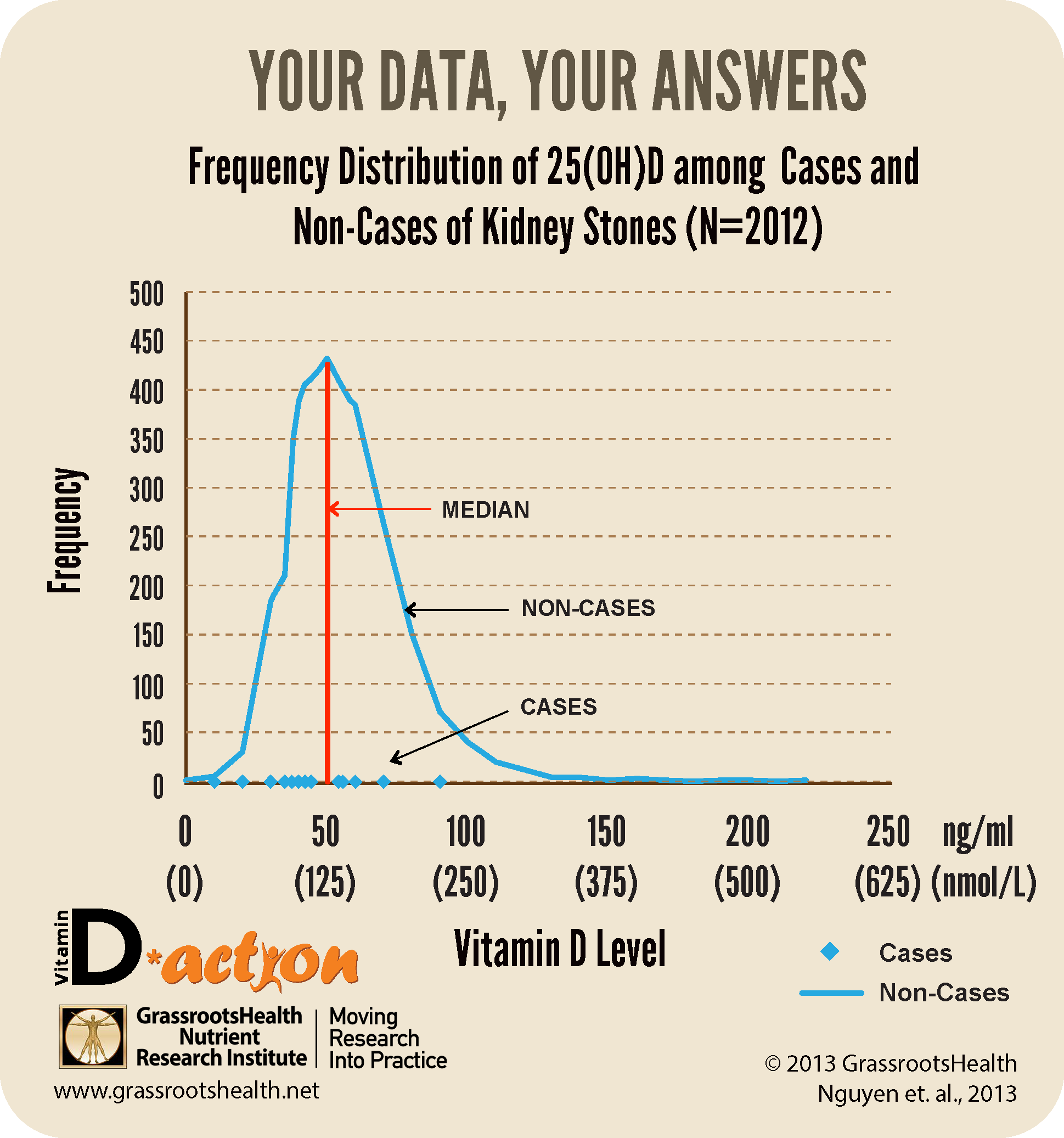
Some doctors think that because vitamin D helps the body to absorb calcium, higher intake of vitamin D can lead to kidney stones made of calcium. But there is something missing about this claim: evidence. Simply put, results from dozens of well-designed studies provide no evidence that vitamin D contributes to kidney stone formation.

Research to the Rescue

A 2013 study by a research team from Creighton University, GrassrootsHealth, and the University of California, San Diego School of Medicine looked at 2,012 adults and found no association between vitamin D levels in the range of 20 to 100 ng/ml and the incidence of kidney stones. Instead, age, weight, and gender were important factors for kidney stone formation.

Click to Enlarge & Print

A 2016 meta-analysis (a method for combining data from multiple studies) by New Zealand researchers included 19,833 participants and again found no connection between vitamin D supplementation dose or duration and kidney stones.

The largest study to look at vitamin D and the risk of kidney stones came out of Harvard Medical School. These scientists studied a whopping 45,616 individuals over a 14 year period. What did they find? You got it – no increased risk of kidney stones with vitamin D.

Not only do high levels of vitamin D not cause kidney stones, two more recent case-controlled studies have shown that people with low levels of vitamin D are more than twice as likely to develop a kidney stone! In other words, higher vitamin D levels may protect you from a kidney stone. One was a study by Girón-Prieto et al. involving 366 patients. The other, by Ticinesi et al., found that overall, patients who developed kidney stones had lower vitamin D levels, and suggested that vitamin D deficiency be reconsidered as a potential cause. These new studies reveal that the old myth of vitamin D leading to kidney stones is unfounded.

If the fear of kidney stones is preventing you from taking vitamin D supplements, rest easy and take the supplements you may need to achieve a healthy vitamin D level.

Is it true?

Our goal with this "Vitamin D Myths" series is to provide information and resources to answer the question, "Why should I care about vitamin D?" and to help dispel the myths and misconceptions surrounding it that may be preventing you and others from accepting it as an essential component to health. We will also discuss other nutrients essential to the function of vitamin D (and vice versa) within the body that should not be ignored.

Vitamin D is necessary for multiple functions within the body and should not be ignored, but has the hype about vitamin D and its role in the body's response to COVID-19 been over-exaggerated? What concerns about vitamin D are valid, and which are not? We want to provide you with evidence based information to help you decide what vitamin D action to take, if any, for your own health.

We want to hear from you!

Is there a particular 'myth' you have heard about vitamin D? Or, something you have read or been told that makes you question whether vitamin D 'deserves' so much attention? Or whether you should be taking it and how much? Share with us by emailing jen @grassrootshealth.org what you have heard that makes you question vitamin D so that we can consider addressing it in our newsletters.

Know if you are getting enough vitamin D and other important nutrients

Vitamin D, along with magnesium, zinc, and omega-3s, are just a few nutrients vital to maintaining our health. To know if you are getting enough of these nutrients, make sure you test today!

We're in a time of great crisis that could be greatly affected by making sure you and everyone you know has a serum level of at least 40 ng/ml. Help us help you.

Do you know what your vitamin D level is? Be sure to test today to find out, and take steps to keep it within a target of 40-60 ng/ml or 100-150 nmol/L! Give your immune system the nutrients it needs to support a healthy you and protect yourself from unnecessary diseases.

GrassrootsHealth Nutrient Research Institute is preparing to do a Community RCT with the use of our myData-myAnswers nutrient health system that over 15,000 people are already using for their health. We will demonstrate how one can use the Nutrient Research Model established by Dr. Robert Heaney to establish the effect of vitamin D serum levels of at least 40 ng/ml (100 nmol/L) on risk reduction with different ethnicities in the population. Please let us know if you're interested in helping sponsor this project.

CLICK HERE for updates and new information about the project.

Through GrassrootsHealth Nutrient Research Institute, you can also test your essential elements magnesium, copper, zinc and selenium, toxins such as lead, mercury and cadmium, as well as your omega-3 levels, inflammation levels and thyroid stimulating hormone (TSH) level. Find out your levels today! Log on to the test selection page (click the link below) to get your tests and see for yourself if your levels can be improved.

Make sure you track your results before and after, about every 6 months!

Click Here to Access the Test Page

How can I track my nutrient intake and levels over time?

To help you track your supplement use and nutrient levels, GrassrootsHealth has created the Personal Health Nutrient Decision System called

For each specific supplement, you can track what days you take it, how much, and many other details.  This will help you know your true supplemental intake and what patterns of use work for you to reach and maintain optimum nutrient levels.  Check it out today!

Can Vitamin D Cause Kidney Stones

Source: https://www.grassrootshealth.net/blog/vitamin-d-kidney-stones-myth/

Share:

Vitamin D 5000 Iu

Vitamin D 5000 Iu

Vitamin D

Also called: Cholecalciferol, Ergocalciferol

On this page

Learn More

  • Related Issues

See, Play and Learn

  • No links available

Summary

Vitamins are substances that your body needs to grow and develop normally. Vitamin D helps your body absorb calcium. Calcium is one of the main building blocks of bone. A lack of vitamin D can lead to bone diseases such as osteoporosis or rickets. Vitamin D also has a role in your nerve, muscle, and immune systems.

You can get vitamin D in three ways: through your skin, from your diet, and from supplements. Your body forms vitamin D naturally after exposure to sunlight. However, too much sun exposure can lead to skin aging and skin cancer. So many people try to get their vitamin D from other sources.

Vitamin D-rich foods include egg yolks, saltwater fish, and liver. Some other foods, like milk and cereal, often have added vitamin D.

You can also take vitamin D supplements. Check with your health care provider to see how much you should take. People who might need extra vitamin D include:

  • Older adults
  • Breastfed infants
  • People with dark skin
  • People with certain conditions, such as liver diseases, cystic fibrosis and Crohn's disease
  • People who have obesity or have had gastric bypass surgery

NIH: National Institutes of Health Office of Dietary Supplements

Start Here

  • Vitamin D From the National Institutes of Health (National Institutes of Health, Office of Dietary Supplements) Also in Spanish
  • Vitamin D (Hormone Health Network)
  • Vitamin D (Harvard School of Public Health)
  • Vitamin D Test From the National Institutes of Health (National Library of Medicine) Also in Spanish
  • Calcium and Vitamin D: Important at Every Age From the National Institutes of Health (National Institute of Arthritis and Musculoskeletal and Skin Diseases) Also in Spanish
  • Vitamin D Toxicity: What If You Get Too Much? (Mayo Foundation for Medical Education and Research) Also in Spanish
  • ClinicalTrials.gov: Vitamin D From the National Institutes of Health (National Institutes of Health)
  • Vitamin D (Nemours Foundation) Also in Spanish
  • Breastfeeding: Vitamin D Supplementation (Centers for Disease Control and Prevention)
  • 25-hydroxy vitamin D test (Medical Encyclopedia) Also in Spanish
  • Calcium, vitamin D, and your bones (Medical Encyclopedia) Also in Spanish
  • Hypervitaminosis D (Medical Encyclopedia) Also in Spanish
  • Vitamin D (Medical Encyclopedia) Also in Spanish

Vitamin D 5000 Iu

Source: https://www.medlineplus.gov/vitamind.html

Share:

Blog Archive

banner