Good Diet Snacks Low Carb

Good Diet Snacks Low Carb

Low-carb snacks – the best and the worst

  1. No preparation
  2. Recipes
  3. Veggie sticks
  4. Berries
  5. Chocolate
  6. Common mistakes
  7. Top 21
  8. Similar guides

What low-carb snacks are good? There's a simple rule: The best low-carb snack is no snack.1

That's right. Snacks are usually not needed on low carb, as hunger should be reduced when doing it right.2 If you're still hungry, you may want to add more healthy fat, protein, or fibrous low-carb veggies to your meals.

That said, we know that everyone wants a snack once in a while. So here are some great options and a few common mistakes to avoid.

No preparation needed
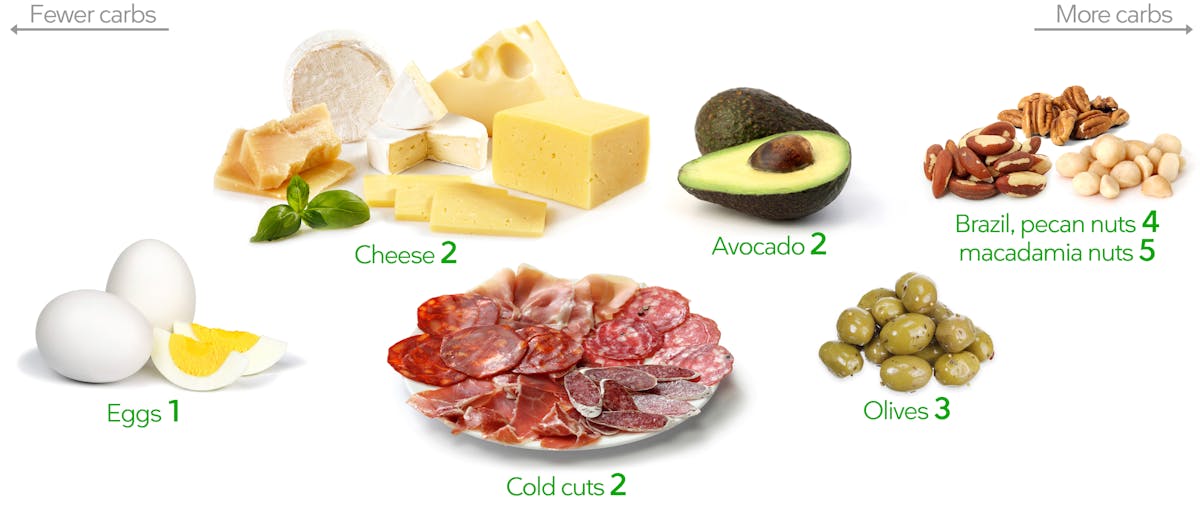
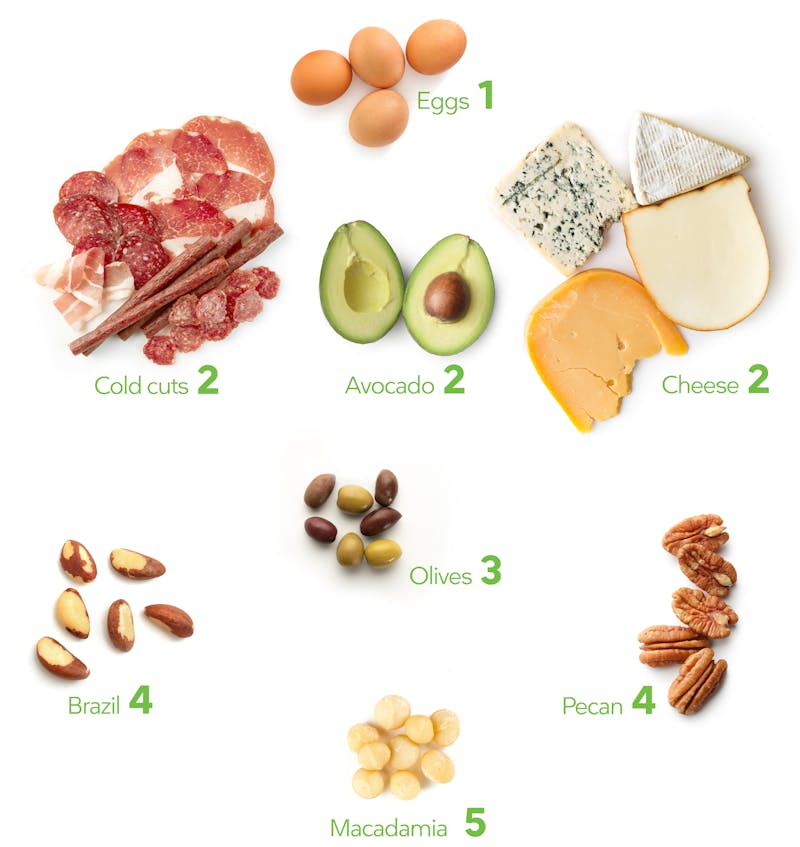
Low-carb snacks: no preparation needed

Keto snacks no preparation needed

The numbers are net carbs (total carbs minus fiber carbs) in 100 grams (3.5 ounces.)3 That means that 100 grams of cheese contains 2 grams of net carbs.

Carbs list

Eggs are a great low-carb option.4 Keep a few hard-boiled eggs ready for when you need a perfect snack. Feel free to add mayonnaise.

Nuts are a low-carb snack favorite. But be careful as the carbs quickly add up, especially if you eat cashews. Choose lower-carb macadamia, Brazil or pecan nuts instead. Low-carb nuts guide

Snack recipes

Are you ready to do some preparations for an awesome low-carb snack? Check out our fantastic low-carb snack recipes, like these top choices:

    Vegetable sticks and dip
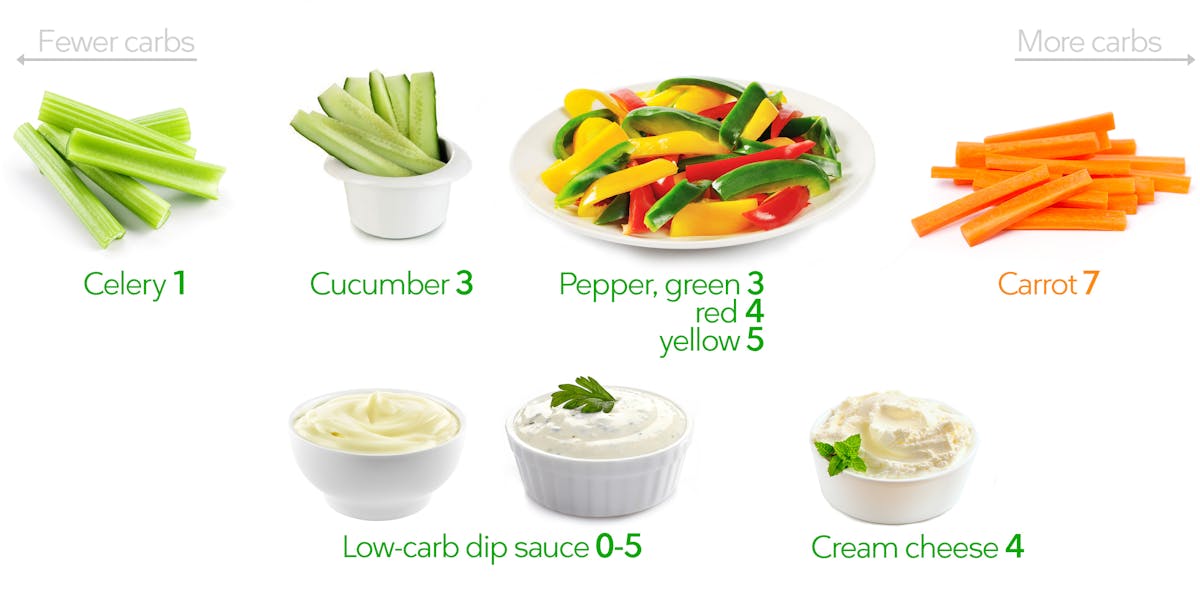
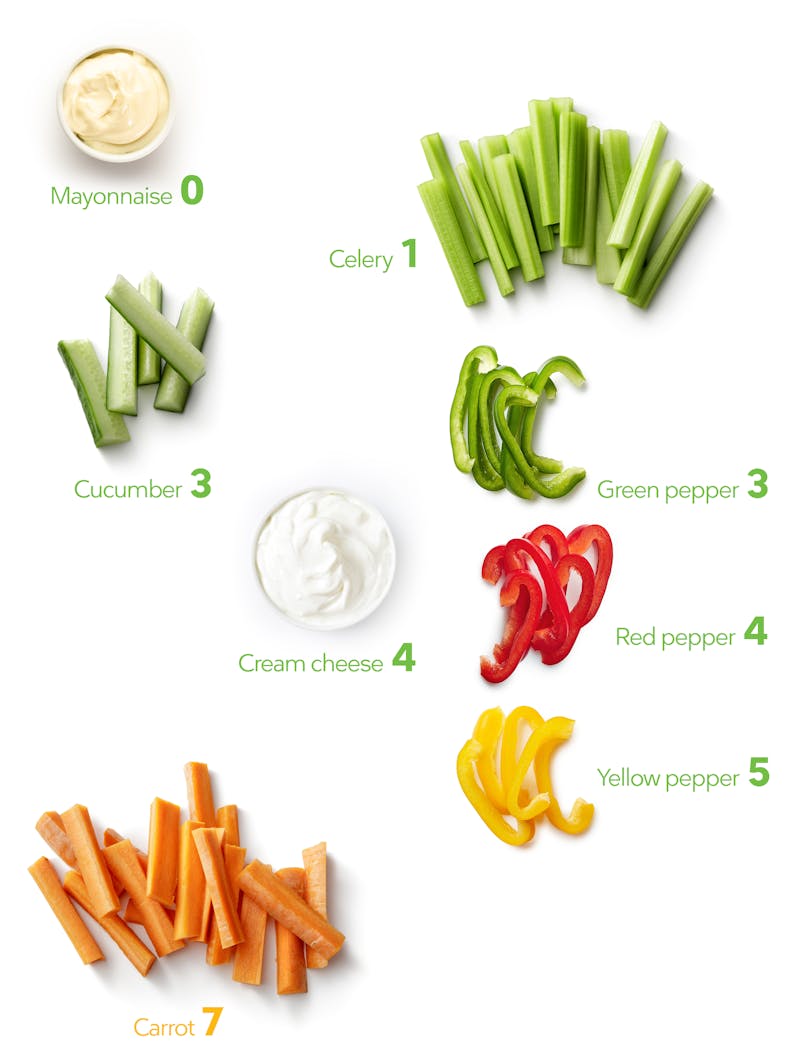
    Low-carb snacks: vegetable sticks

    Keto Veggies and dip

    Numbers are digestible carbs (net carbs) per 100 grams (3½ ounces).

    Carbs list

    Vegetable sticks are relatively low carb, except for carrots, which are slightly higher. Low-carb vegetables guide

    Dip: Add cream cheese or any low-carb and high-fat dip sauce.5 Just make sure not to go overboard as the calories can add up quickly.

    Here are our top recipes:

      Berries and cream
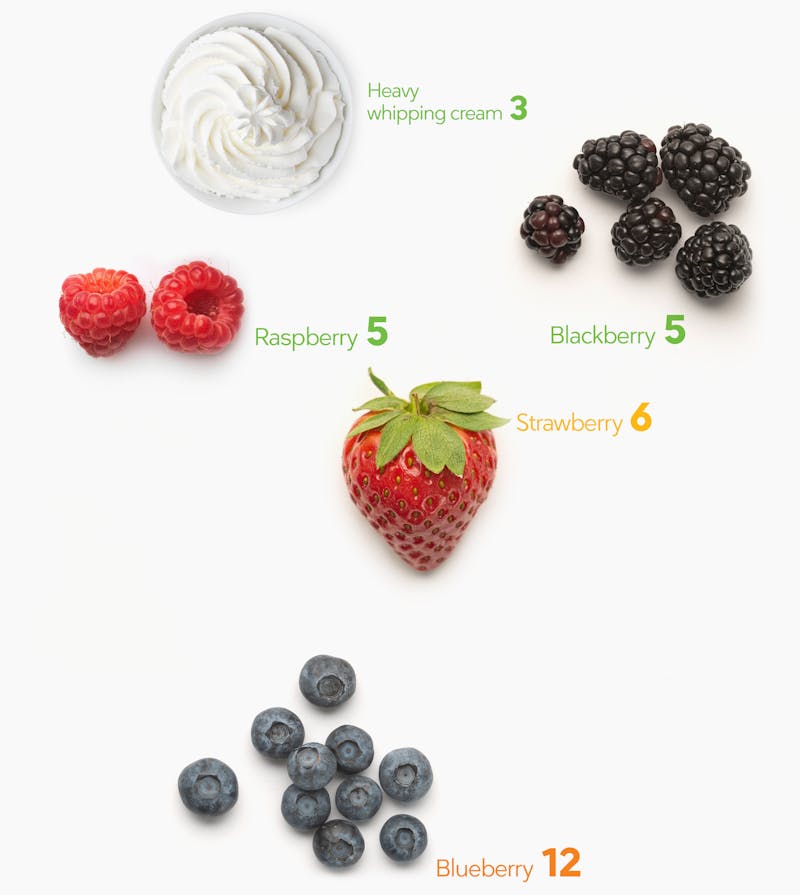
      Low-carb snacks: berries and cream

      Keto snacks berries and cream

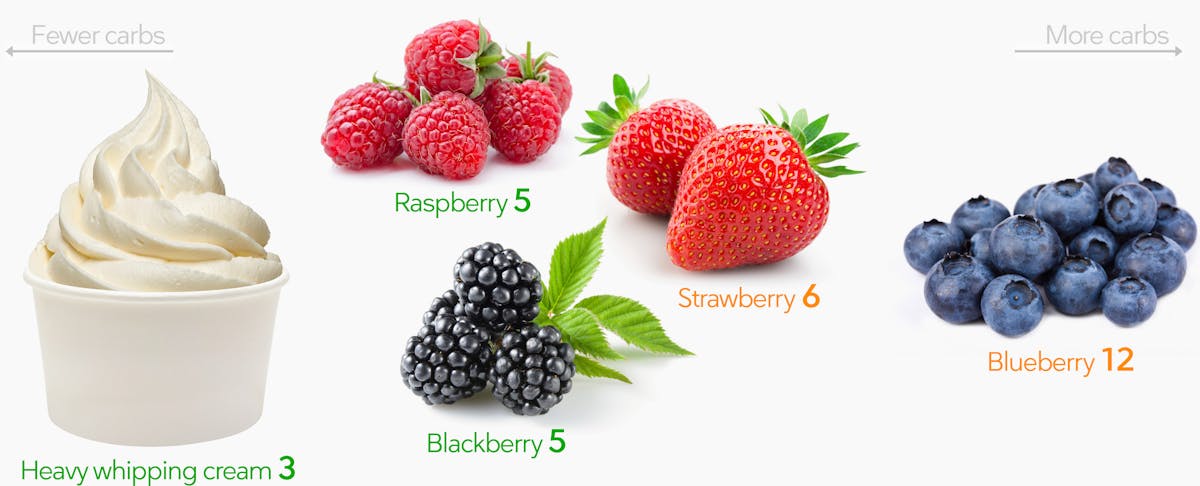
      Berries are decently low-carb sweets. But if you're on a strict low-carb diet you may need to make them an occasional treat. Blueberries have the most carbs. Low-carb fruits and berries guide

      Heavy whipping cream –
      forget low-fat fake cream. Get real heavy whipping cream, ideally at 40 percent fat and definitely unsweetened (the natural sweetness is quite enough once you get used to it). Whip and have it with your berries. Note that this is absolutely delicious and easy to over-consume, which may slow down weight loss. So try to not overdo it.

      Carbs list

      Recipes

        Chocolate

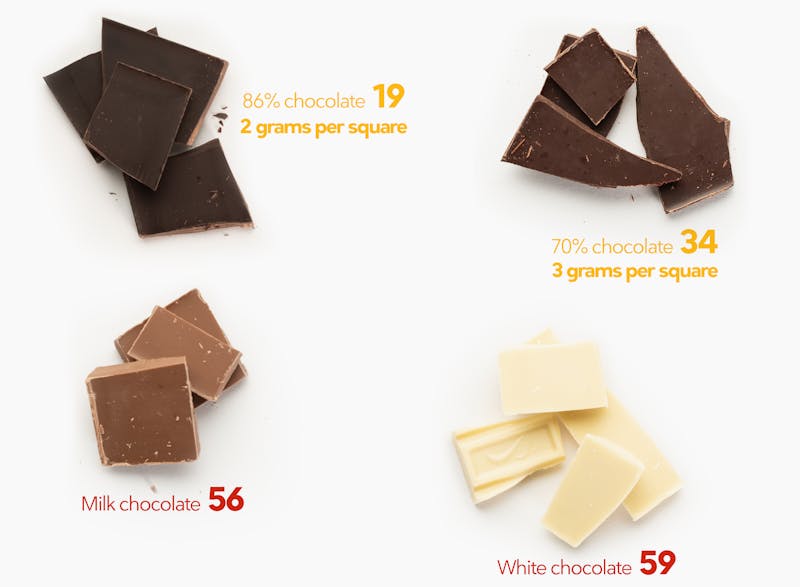
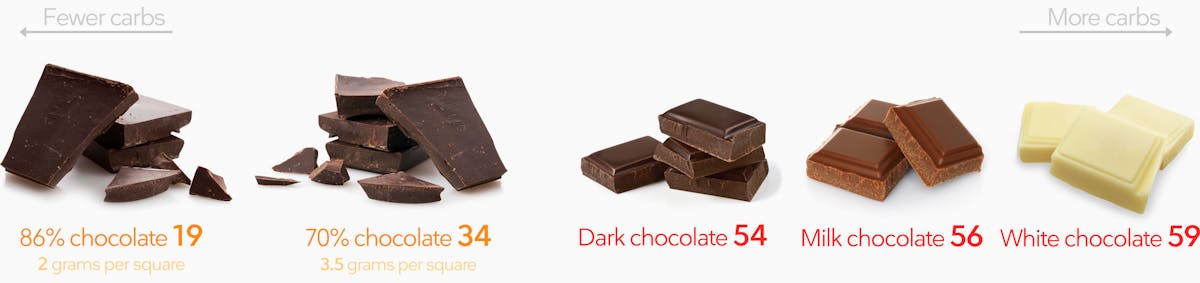
        Digestible carbs per 100 grams (3½ ounces)
        Low-carb snacks: Chocolate

        Keto visual guide Chocolate

        Chocolate is not low carb. However, you can occasionally get away with one or two thin squares of high-cocoa chocolate (70%+) even on a strict low-carb diet. On a more liberal low-carb diet you could do it regularly.

        • One small thin square (10 grams or less than half an ounce) of 86 percent chocolate contains about 2 grams of carbs.
        • Switch to 70% chocolate and you get about 3.5 grams per square.
        • Regular chocolate can be 6 grams of carbs or more per square – not an option if you want to stay low carb.

        Carbs list

        More options
        Keto snacks: pork rinds and beef jerky

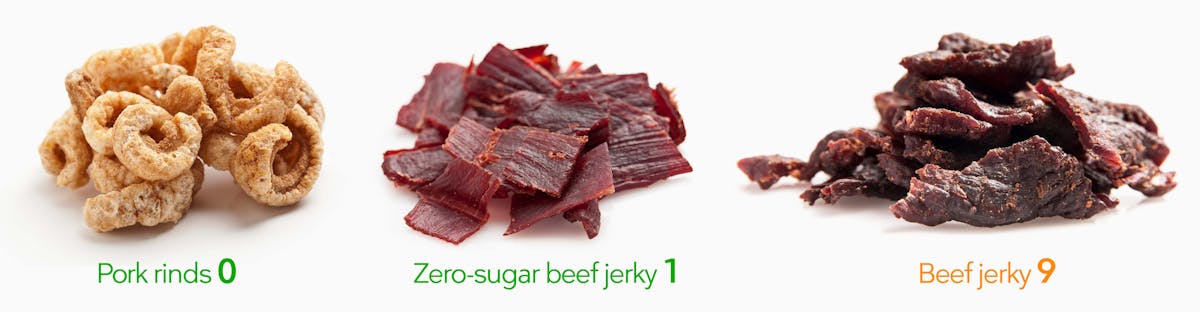
        Beef jerky: Note that almost all available commercial options have added sugar, which is why a normal carb count is 9 grams per 100 grams (3½ ounces). We recommend you look for brands with no added sugar, or make your own.

        Carbs list

        Chips recipes

        Common mistakes on low carb
        Low-carb snacks: common mistakes

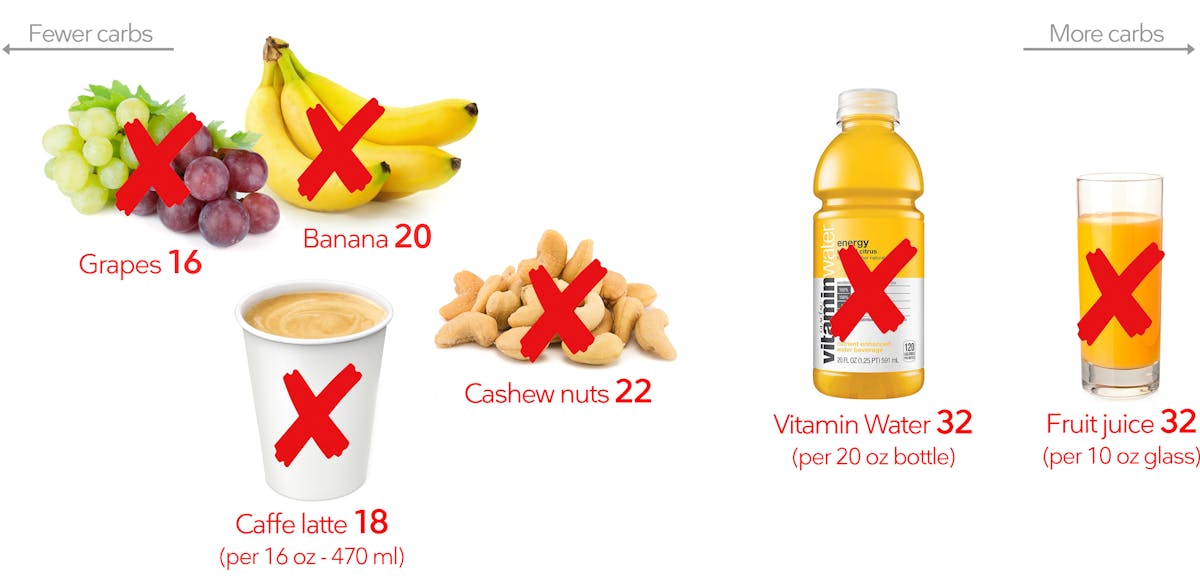
        Caffe Latte: Note that there is a quite a lot of milk in this, and milk is around 5 percent carbs (from lactose, or milk sugar). To keep the carbs low, drink black coffee, or add (if you need to) a few teaspoons of milk or cream.

        Juice and functional waters: Juice and many flavored waters contain a lot of sugar. Avoid them.

        Fruit: Fruit is candy from nature and contains plenty of sugar. It's not nearly as bad as drinking juice, as the fiber in fresh fruit helps decrease the amount of sugar absorbed by the gut. But, because it's still fairly high in carbs, fruit will have to be limited or avoided on a strict low-carb diet. A more liberal low-carb diet allows for a bit more fruit consumption. Bananas and grapes contain the most sugar of all fruit. Check out the best options in our low-carb fruits guide

        Cashew nuts: These contain a lot of carbs (other nuts are a lot lower). Learn more in our low-carb nuts guide

        Carbs list

        Note: Carbohydrate information for beverages is provided in common serving sizes rather than per 100 grams:

        Really terrible options
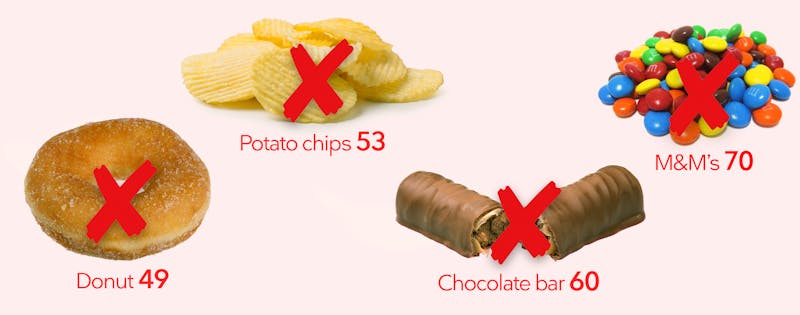
        Low carb snacks: Terrible options

        These options are all bad on a low-carb diet, as they are high in refined carbs and sugars. Avoid whenever possible.

        Carbs list

        Also be very skeptical of "low-carb" versions of chocolate, cookies, etc. Not only do these products tend to encourage more sugar cravings, they are also usually full of sugar alcohols. Some of these sugar alcohols raise blood sugar, making it harder to lose weight.6 Learn more

        Instead, choose from the great simple options closer to the top of this page, or check out our awesome low-carb snack recipes below!

        21 great low-carb snacks

        1. Egg muffins. One of the best time-saving breakfasts of all time, hands down, and also a great snack.
        2. Keto garlic bread. Deliciously crispy on the outside, soft on the inside and only 1 gram of carbs per piece.
        3. Keto quesadillas. Cook up this Mexican-inspired appetizer ASAP. Decadent. Cheesy. And officially keto! Easy to make, tasty, and pretty enough to make you look like a celebrity chef. Serve them up as is or decked-out with sour cream, guacamole, and salsa. Olé!
        4. Sesame crispbread. Do you love to sink your teeth into something crunchy every now and then? Then this is for you.
        5. Cheese chips. Looking for a crunchy chip to snack on or to enjoy with guacamole or dip? This two-ingredient fix will keep you satisfied!
        6. Onion rings. Make your own low-carb and gluten-free onion rings in the oven – simple and delicious.
        7. Tortilla pizza. These mouthwatering mini-pizzas are as big on flavor as they are low in carbs. In just a few minutes you'll be snacking on a gooey pizza loaded with all the lip-smacking stars of this Italian classic.
        8. Creamy keto shrimp tacos. Why should taco fillings have all the fun? In this recipe, the cheesy taco shells share the starring role with shrimp in a luscious cream sauce.
        9. Salami and cheese chips. A crunchy low-carb snack that only takes minutes to prepare. Salami and cheese in a delicious combination. Perfection!
        10. Zucchini chips. Do you miss potato chips on a low-carb diet? Now you don't have to. You'll need several zucchinis for a bowl of these chips, but they are truly delicious!
        11. Low-carb granola bars. A healthier and lower-carb option to all the sugary bars out there. Make your own bars with nuts, seeds, healthy fats and truly dark chocolate.
        12. Cheese roll-ups. It's perhaps the fastest, most simple low-carb snack you can make – and it tastes great. Cheese roll-ups are perfect as a low-carb snack that you'll make in just a few seconds.
        13. Cheddar cheese and bacon rolls. Cheese and bacon! What's not to love? This awesome keto snack is easy and quick to make.
        14. Kale chips. Do you want healthy and tasty green chips with very few carbohydrates? We usually have kale in the holiday season, so we made some and found that they were quite tasty.
        15. Eggs on the go. Here's an inspiring way to take your eggs on the road! With so many ways to prepare eggs, this one ups the fun factor, with optional, creative filling choices. Egg-cellent!
        16. Bacon-wrapped halloumi cheese. These wonderful salty treats can be served as a snack or an appetizer. Serve them on top of your favorite vegetables and leafy greens and you'll have a delicious and filling salad.
        17. Baked mini bell peppers. These peppers may be tiny, but their flavor is mighty! Bursting with creamy cheese, chorizo, savory herbs and a pop of chipotle.
        18. Salad sandwiches. Who says a great sandwich needs bread? These fun keto salad sandwiches are proof that lettuce can work just as well.
        19. Low-carb cream cheese with herbs. This low-carb cream cheese with herbs is so easy to make!
        20. Baked cheese. This low-carb baked cheese is salty, tangy and flavorful.
        21. Caprese snack. A plate is a blank canvas begging for sights and sounds. And this caprese fills the plate with scents, colors, and you provide the sound.

        Sweet things – caution recommended

        While the sweet recipes below are low carb, they are also very rewarding and tempting.7 They may encourage eating when not hungry, and that can slow your weight loss. So be a bit careful.

        However, these low-carb recipes are still likely better for your weight and health than high-carb versions of similar recipes.8

        More low-carb guides

        Visual guides

        More

        A low-carb diet for beginners
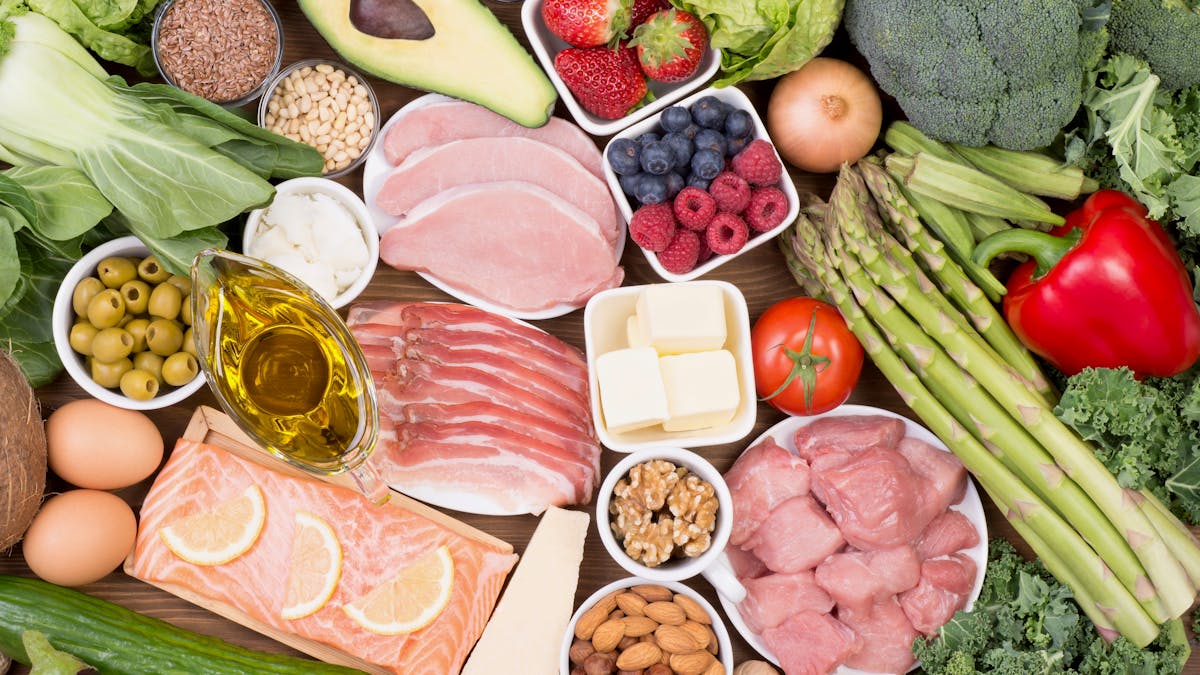
        A low-carb diet for beginners

        Low-carb foods
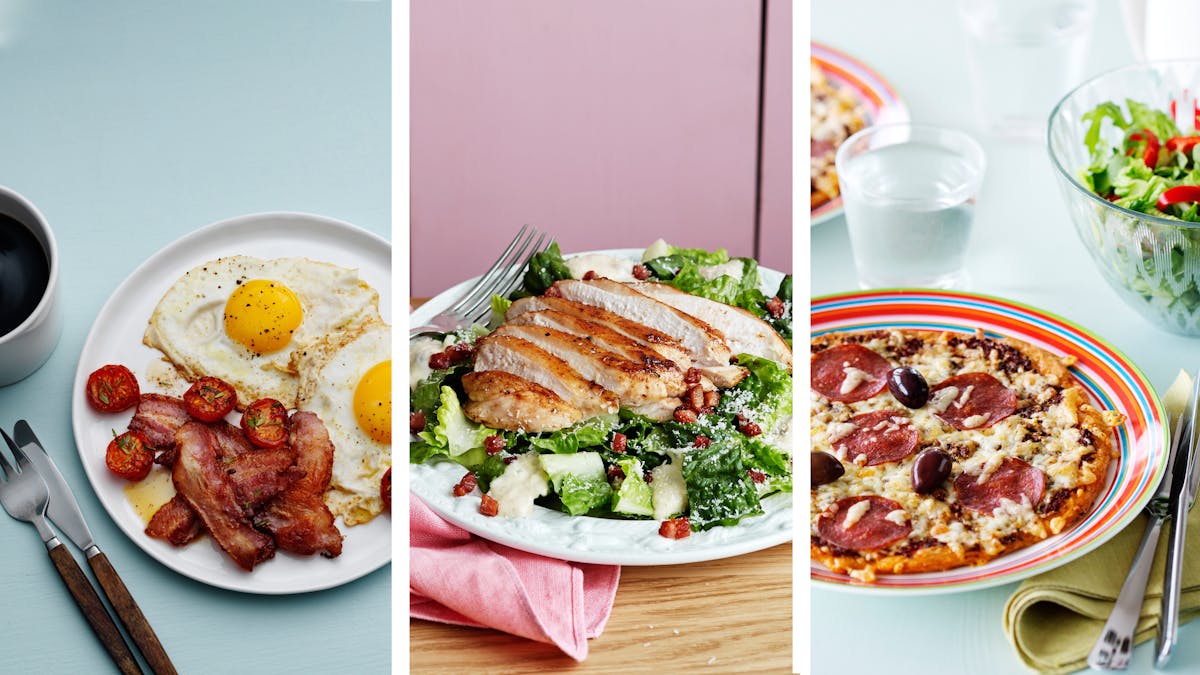
        Low-carb foods

        14-day low-carb diet meal plan

        14-day low-carb diet meal plan

        Good Diet Snacks Low Carb

        Source: https://www.dietdoctor.com/low-carb/snacks

        Share:

        Can You Eat Baked Potatoes On A Low Carb Diet

        Can You Eat Baked Potatoes On A Low Carb Diet

        • Definition
          • What Is a Low Carb Diet?
        • Foods
          • What Do You Eat on a Low Carb Diet?
        • Benefits
          • What Are Advantages of a Low Carb Diet?
        • Drawbacks
          • What Are Disadvantages of a Low Carb Diet?
        • Guide
          • What Can You Eat on a Low Carb Diet? Topic Guide

        What Is a Low Carb Diet?

         Meat, poultry, and fish are low in carbohydrates. Anyone following a low carb diet should focus on eating healthy fats and proteins such as fish, nuts, and beans.

        Meat, poultry, and fish are low in carbohydrates. Anyone following a low carb diet should focus on eating healthy fats and proteins such as fish, nuts, and beans.

        A low carb (low carbohydrate) diet is one that focuses on limiting carbohydrates to help the body burn fat instead of sugar for fuel. With a low-carbohydrate diet, dieters typically consume between 60 and 130 grams of carbohydrates per day, compared to a standard diet that contains 200 to 300 grams of carbohydrates.

        Popular low carb diets include:

        • Atkins Diet plan
        • South Beach Diet plan
        • Keto diet
        • Paleo diet

        What Do You Eat on a Low Carb Diet?

        Carbohydrates are found in fruits, vegetables, grains (breads, rice, pasta, and cereal), alcoholic beverages, and dairy products. Meat, poultry, and fish are low in carbohydrates.

        Anyone following a low carb diet should focus on eating healthy fats and proteins such as fish, nuts, and beans. Some low carb diets allow for foods high in saturated fats, such as found in butter and red meat, which can increase cholesterol levels and raise the risk of heart disease.

        In general, foods to eat on a low carb diet include:

        • Vegetables
        • Fish and shellfish
        • Poultry
        • Meat
        • Eggs
        • Oils, butter, mayonnaise
        • Some cheeses
        • Low sugar fruits such as berries, cherries, and melon
        • Unsweetened yogurt
        • Nuts
        • Whole grains
        • Legumes such as lentils and beans
        • Unprocessed high fiber whole grains

        Foods to avoid on a low carb diet include:

        • Foods with added sugars such as processed cake, cookies, candy, pastries, and soft drinks
        • Simple carbohydrates such as in juices, breads, cereals, and dried fruit
        • Starchy foods such as simple carbs like bread, pasta, rice, and chips
        • Starchy vegetables such as corn and potatoes
        • Any sugars, including honey, maple syrup, and agave
        • Fat free salad dressings, which often have added sugars and carbs
        • Milk
        • Juice
        • Beer

        QUESTION

        Weight loss occurs in the belly before anywhere else. See Answer

        What Are Advantages of a Low Carb Diet?

        Low carb diets may help with:

        • Weight loss
          • A study in the Journal of the American Medical Association compared the Atkins Diet, a popular low carb diet, to other popular diets (Zone, Weight Watchers, and Ornish) for weight loss and found each diet modestly reduced body weight and several cardiac risk factors at 1 year
        • Lowering triglycerides
        • Boosting HDL ("good") cholesterol
        • Increasing heart health, but only when protein and fats come from healthy sources such as vegetables
          • Low carb diets high in animal fats and proteins do not offer as much protection

        What Are Disadvantages of a Low Carb Diet?

        Low carbohydrate diets can have some health risks, such as:

        • Low blood pressure
        • Kidney stones
        • Constipation
        • Nutrient deficiencies
        • Increased risk of heart disease
        • "Keto flu" which includes symptoms such as upset stomach, dizziness, decreased energy, and mood swings caused by the body adapting to ketosis

        Low carb diets may not be sustainable for many people, resulting in weight gain if they stop following the diet and start eating more carbohydrates.

        From WebMD Logo

        Reviewed on 11/5/2020

        References

        Can You Eat Baked Potatoes On A Low Carb Diet

        Source: https://www.emedicinehealth.com/what_can_you_eat_on_a_low_carb_diet/article_em.htm

        Share:

        Are Chickpeas Good For Low Carb Diet

        Are Chickpeas Good For Low Carb Diet

        10 Foods That Are Higher in Carbs than You Think

        SaveComments

        Post Image

        (Image credit: Ridofranz/Getty Images)

        (Image credit: The Kitchn)

        Following a ketogenic diet means scouring the grocery store for the lowest-carb foods you can find. We've already explored some of these great low-carb options, but what about the opposite side of the spectrum? There are a surprisingly number of good-for-you foods that you might think are low in carbs but are actually a bit too high for this eating plan. Remember, we're taking about net carbs here — the carbs minus the fiber, which is what truly counts on a keto diet. Here are 10 foods to be mindful of when following a keto diet.

        1. Mango

        If you're following a ketogenic diet, you have to be mindful that some fruit can be pretty high in carbohydrates. Mango is one good example, as 1 cup of cut-up mango has 20 net carbs, often the total amount of carbs allowed in one day of this eating plan.

        2. Bananas

        Bananas are another high-carb fruit. While grabbing one on your way out the door for an easy breakfast may seem like a good idea, know that 1 medium banana contains 24 net carbs.

        3. Dates

        This dried fruit is extra sweet and satisfying, which is why we love it, but it's also why it's pretty high in carbs: 4 pitted dates contain 24 net carbs.

        4. Cashews

        Nuts are a great source of protein and fat but some contain more carbs than others. Cashews are on the higher end of the spectrum — 1 ounce (18 medium) contain 8 net carbs. Instead, try lower-carb nuts like pecans and macadamias.

        5. Ketchup

        What looks like an innocent condiment is actually pretty high in sugar, and therefore carbohydrates. Just 2 tablespoons of ketchup contains 8 net carbs.

        6. Sweet Potatoes

        Sweet potatoes are seriously wholesome, but like other starchy roots, they are high in carbs. 1 medium contains 22 net carbs, so it's best to limit your intake if you're following a keto diet.

        7. Green Peas

        Peas are pretty starchy vegetables, which means they are a bit high in carbohydrates: 1 cup of cooked green peas contains 16 net carbs.

        8. Chickpeas

        Chickpeas are a great source of protein and fiber but if you're following a keto diet, their amount of carbs make them less amenable to this eating plan: 1 cup contains a whopping 35 net carbs.

        9. Blueberries

        As mentioned above, while fruit is a healthy choice, it can be high in carbs. Berries generally fit this bill, especially blueberries — 1 cup contains 19 net carbs.

        10. Low-fat plain yogurt

        While fruit-flavored yogurts are definitely not keto-friendly, due to their high amount of sugar, it may be surprising to know that low-fat plain yogurt is also high in carbs: 1 cup contains 17 net carbs. A better choice is full-fat plain Greek yogurt — because the carbohydrate-rich whey has been strained out and the fat has not been removed, 1 cup contains just 4 net carbs instead.

        Sheela Prakash

        Senior Contributing Food Editor

        Sheela is the Senior Contributing Food Editor at Kitchn and the author of Mediterranean Every Day: Simple, Inspired Recipes for Feel-Good Food . She received her master's degree from the University of Gastronomic Sciences in Italy and is also a Registered Dietitian.

        Follow Sheela

        SaveComments

        Are Chickpeas Good For Low Carb Diet

        Source: https://www.thekitchn.com/10-foods-that-are-higher-in-carbs-than-you-think-253463

        Share:

        Low Carb Diet Results

        Low Carb Diet Results

        As a rule, I shy away from extreme diets or eating regimens. Atkins? Never heard of them. Whole 30? Wholly not going to bother with it. Paleo? Some things are better left in the history books.

        However, the simplicity of the ketogenic (keto for short) diet plan appealed to me, and seeing as I had a wedding to attend—and a bridesmaid's dress to wear—I needed something effective to help me shed some weight, and fast.

        Find out what happened when I decided to shun carbs for 30 days including how I did it, my successes, my challenges, my results and my life-long takeaways.

        How I Did the Keto Diet Meal Plan

        Four things that really helped me get started were:

        • a goal
        • a plan
        • focusing on carbs only
        • having a friend for accountability

        I started the keto diet about one month before the wedding with a goal of losing 10 pounds. Since a low-calorie diet can produce up to a 2-pound weight loss per week, 10 pounds over 4 weeks didn't feel extreme. If the keto diet plan was as great as had been touted, I thought 10 pounds would be easy.

        Before I started, I spent several weeks researching the diet, following keto-focused Instagram accounts for inspiration, and creating a plan (see our healthy version of a keto meal plan to help you make a plan). This last part, I would soon learn, was the most important thing for my journey.

        I used an online keto calculator to set a goal for calories, carbs and fat. I mostly followed the suggestions, with the exception of fat. The calculator suggested over 200 grams of fat each day. That's tough to hit without loading ghee into my coffee or swigging some coconut oil before lunch. Can it be done? Absolutely. I just couldn't get there. For me, the focus was on reducing carbs. I let the other pieces just fall into place.

        I also asked a friend to join me as an accountability partner. She had tried the keto diet before with good success, so having a guide for my myriad questions was a big help. It was also nice to have someone to message at 10 p.m. when I really wanted a cookie so she could commiserate with me. (We agreed the cookie would be delicious, and then ate a cheese stick.)

        My Biggest Challenges

        Bacon-Wrapped Chicken with Roasted Zucchini

        Eating only 20 grams of carbs a day is hard.

        The keto diet plan is a high-fat and low-carb (HFLC) diet. I would actually describe it as extremely low-carb-you're allowed to eat just 20 grams in a day. Some people on keto follow a net-carb plan (you can subtract the grams of fiber from a food's total carbs) and you're allowed to eat more carbs in a day. For my 30-day diet and for the sake of simplicity, I stuck with total carbs.

        As a rule, I aimed for 20 grams each day-2 at breakfast, 5 at lunch, 3 for snacks and 10 for dinner. I found that if I aimed for 20, I'd land under 30. That was successful enough for me.

        The key to hitting my number was to plan, plan, plan. I worked out all three meals, down to the condiments, plus snacks on the weekends. If I knew what I was having and what I was "allowed" to have while staying under my carb goal, I found managing the infrequent cravings and hunger pangs easier. I can't stress enough the importance of planning for a keto diet.

        The food is repetitive.

        I ate a lot of bacon, cheese, eggs and meat (steak and chicken mostly). For a person whose eating philosophy is typically more plant-based and whole-food-focused, eating processed pork products every morning took a lot of personal persuasion. It also took a complete mental shift, because eating multiple pieces of bacon every day for weeks on end goes against everything I've been taught for personal health. (Learn more about a vegetarian keto diet.)

        This can be a very low-calorie diet.

        Keeping your carb count near 20 reduces your calorie consumption too. Carb-heavy foods are some of the most calorie-dense foods we eat, mainly because we eat a lot of them. If you cut carbs, you dramatically reduce your possible calorie intake. (See the 30 best low-carb foods.)

        Some days, I struggled to get over 1,200 calories. For my goal of 1,800 calories, I fell short almost every day. That's enough of a calorie deficit to produce weight loss, even without the low-carb count.

        I came down with "keto flu."

        The "keto flu" is a term you'll see on keto blogs and forums. For me, it was a very real event, but not everyone will experience it.

        As your body breaks through the carb cycle and enters ketosis (where you rely on ketones, instead of carbs, for energy), you may experience fatigue, mental fogginess, even irritability. My "keto flu" only lasted a day, and once I passed it, I never experienced the symptoms again. I even ate a cookie one day during the diet to celebrate my birthday. I certainly came out of ketosis when I ate that treat, but I didn't experience any repercussions for it. (Learn more about sneaky side effects of the keto diet including some of those flu-like symptoms).

        My Biggest Successes on the Keto Diet Plan

        Eggs

        I beat my weight-loss goal.

        While I set out to drop a quick 10 pounds, I quickly surpassed it. I was down 10 pounds within three weeks and hit 15 pounds two days before the wedding.

        It's important to keep in mind that when you are on a low-carb diet of any type, you will lose several pounds in the first few days. That's because your body is dropping water weight. When I returned to typical eating over the wedding weekend, I gained 4 pounds. I didn't overeat that weekend. I had just returned to eating carbs, so the water weight returned.

        I had more energy (but not every day).

        Even better, I had so much energy and I didn't experience the typical mid-afternoon energy slumps. Gym time was a bit of a challenge. Without carbs, your body has to burn fat for energy, and some days, that will leave you feeling drained of energy during a workout. That's OK. Stick with it, and try again tomorrow.

        I learned to be very creative in the kitchen.

        It's almost impossible to eat at a restaurant and keep your keto status. (After the third time you ask the server to hold the onions from your chicken fajitas, you'll just want to never go into a restaurant again.) Luckily, I consider myself an adventurous cook, frequently cooked at home before the diet, and am willing to try new recipes.

        Of course, with a keto plan, your ingredient list is dramatically shortened. I scoured blogs, Instagram, Pinterest and other sources for reliable recipes, and then I put my own thinking cap on and came up with several dishes I really enjoyed.

        Write the recipes down, use a meal-tracking app like MyFitnessPal to record the ingredients, and you can figure out if a recipe can work for you. It takes a bit more work than an average meal plan, but it's worth it.

        I broke my sugar addiction.

        You can't eat sugar on the keto diet, and most of the no-carb sugar substitutes don't work for me. So when you're left with no recourse, you just have to quit sugar.

        That doesn't mean the cravings went away. In the first few days, the cravings for a peanut butter cup or a soda or even just a banana were strong. (Here's when having an accountability buddy really helps.) When you go back to typical eating, you might find (as I did) that many foods you ate regularly are now just too sweet to finish.

        Lifelong Takeaways from My 30 Days on the Keto Diet Plan

        Chipotle-Marinated Pork Tenderloin

        I won't be staying on a keto diet meal plan for the long term—I really can't eat that much bacon anymore—but I do expect I'll return to it several times a year. If nothing else, the strict diet works well for me as a reset after a long splurge (hello, holidays!), and my month-long experiment helped me break my dependency on some of my biggest food crutches (sugar, pasta, crackers).

        The keto diet is not for everyone. Certainly, if you have blood sugar issues or a history of heart disease, you should not try this diet without a doctor's supervision. However, if you're in good health and are looking for a weight-loss jump-start, the keto diet might be the opportunity you've been looking for. I just hope you really like bacon.

        Low Carb Diet Results

        Source: https://www.eatingwell.com/article/290678/i-tried-the-ketogenic-diet-for-30-days-and-heres-what-happened/

        Share:

        Nature's Measure Vitamin D 400 Iu Review

        Nature's Measure Vitamin D 400 Iu Review

        Don't miss out on the latest nutrition and supplement research

        Enter your email and we'll keep you on top of the latest nutrition research, supplement myths, and more.

        Study under review: Improved Dietary Guidelines for Vitamin D: Application of Individual Participant Data (IPD)-Level Meta-Regression Analyses

        You are reading a free Examine article. Become a Member to get full access to all our articles and stay on top of the latest research.

        Introduction

        Vitamin D deficiency is generally accepted to be a blood level of 25-hydroxyvitamin D {25(OH)D} less than 20 nanograms per milliliter (ng/mL) or 50 nanomoles per liter (nmol/L), a threshold supported by both the National Academies of Sciences [1] and the Endocrine Society [2]. As with other vitamins and minerals, government bodies have established recommendations for the dietary intake of vitamin D to prevent deficiency in the general population.

        One such recommendation, put forth by the National Academies of Sciences, is the recommended daily allowance (RDA) of 600 IU per day [1] for both children and adults up to age 70. The RDA represents a level of intake believed to meet the nutritional requirement of 97.5% of the population. As such, virtually all people should be able to increase their blood levels of 25(OH)D to above 20 ng/mL by consuming 600 IU of vitamin D per day, be it from food or supplements. Importantly, the studies used to establish the RDA were performed exclusively in Northern regions during winter months to rule out the possibility that skin exposure to sunlight contributed to vitamin D requirements (since we naturally make vitamin D when the skin is exposed to sunlight or UVB radiation).

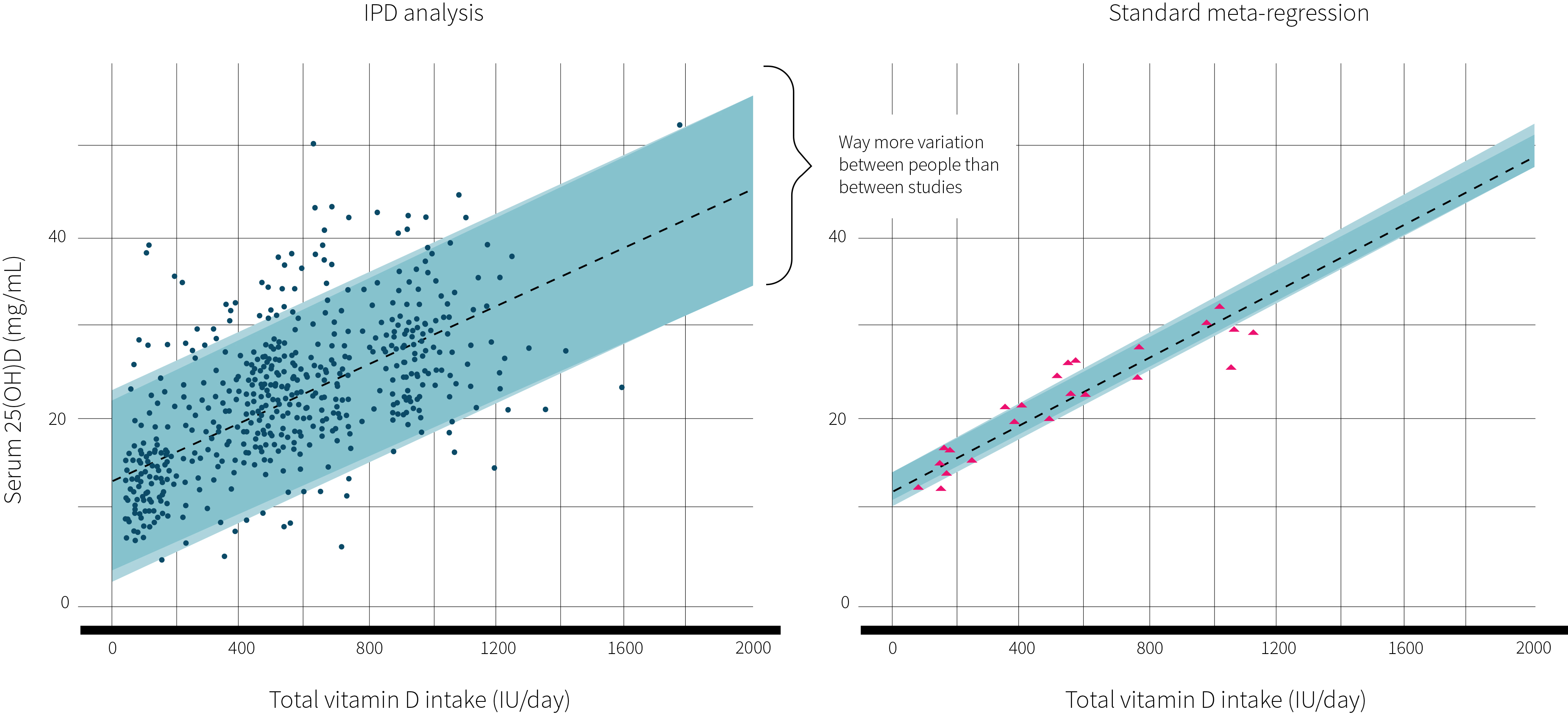
        The National Academies of Sciences used a standard meta-regression approach to analyze several large randomized controlled trials to determine their vitamin D recommendations. Essentially, vitamin D intake is plotted on the x-axis and 25(OH)D levels are plotted on the y-axis. Each data point represents one study, an average value representing all individuals. Although this approach accounts for between-study variability, it cannot incorporate between-participant variability, which is crucial for estimating individual recommendations.

        If we instead plot every single participant used to determine the plotted averages in the standard meta-regression, then we have a meta-regression based on individual participant data (IPD). This approach is considered [3] the gold standard for aggregating data because it minimizes publication and reporting biases and allows for detailed data checking and verification. The study at hand was an IPD meta-regression of several large randomized controlled trials to determine the dose-response effect of vitamin D intake on serum 25(OH)D levels and compare this result with that obtained using a standard meta-regression of the same data.

        Current recommendations for vitamin D intake were formulated with the use of a standard meta-regression analysis that looks at group averages rather than individuals. Using individual participant data is considered the gold standard when aggregating data because it incorporates between-people variability, minimizes publication and reporting biases, and allows for detailed data checking and verification. The study under review conducted a meta-regression of several randomized controlled trials to determine vitamin D requirements using both standard methods and individual participant data.
        Table 1: Vitamin D recommendations around the world
        Threshold Recommendation

        Scientific Advisory Committee on Nutrition (United Kingdom)

        10 ng/mL

        400 IU

        Nordic Council of Ministers (Nordic countries)

        20 ng/mL

        400 IU

        National Academies of Sciences (USA & Canada)

        20 ng/mL

        600 IU

        European Food Safety Authority (European Union)

        20 ng/mL

        600 IU

        The German Nutrition Society (Germany)

        20 ng/mL

        800 IU

        Who and what was studied?

        The study under review used predefined criteria established by the National Academies of Sciences to search for eligible randomized controlled trials to be analyzed. All studies were performed in healthy humans, never exceeded a supplemental dose of 2000 IU per day, used vitamin D3 and not vitamin D2, provided vitamin D alone and not with co-administration of calcium, were performed during November to March at relatively high latitudes (greater than 49.5 degrees), and lasted at least six weeks. Ultimately, the authors obtained the raw data for seven randomized controlled trials that met their eligibility criteria, which included 23 treatment arms and 882 participants. The National Academies of Sciences used five of these studies in determining the RDA for vitamin D, while the two most recent were published after.

        The seven studies were analyzed using both an IPD and standard meta-regression to determine the amount of vitamin D necessary to maintain a 25(OH)D status greater than 20 ng/mL in 50% and 97.5% of the population. These values correspond to the National Academies of Sciences' estimated average requirement (EAR) and RDA, respectively. The data was adjusted for age and baseline 25(OH)D levels.

        Four of the included studies were conducted exclusively in adults and three were conducted exclusively in children. To ascertain whether age influences vitamin D requirements, a sensitivity analysis was performed using data from the adult trials exclusively (i.e., excluding studies on children). Additionally, the adult trials were analyzed in a second sensitivity analysis that adjusted for BMI to determine whether BMI influences vitamin D requirements.

        The study under review analyzed seven randomized controlled trials and 882 participants using both an IPD and standard meta-regression to determine the amount of vitamin D necessary to maintain a 25(OH)D status greater than 20 ng/mL in 97.5% of the population. All studies met predefined eligibility criteria established by the National Academies of Sciences.

        What were the findings?

        The IPD meta-regression (pictured in Figure 1) showed that 436 IU of vitamin D was necessary for half of the participants to achieve 25(OH)D levels greater than 20 ng/mL (EAR) and that 1044 IU was required for 97.5% of participants to be above 20 ng/mL (RDA). Comparatively, the standard meta-regression resulted in a RDA of 568 IU. There was no significant influence of BMI or age on vitamin D requirements.

        Figure 1: Results of IPD vs standard meta-regression

        What does the study really tell us?

        The study under review suggests that the current RDA for vitamin D may be grossly underestimated because of the choice of data used by the National Academies of Sciences. Using the raw data for each participant from seven studies (IPD meta-regression) results in an RDA that is 84% higher than that obtained using the averages of each treatment arm from the same dataset (standard meta-regression).

        The findings of this study underscore the importance of the source of data being analyzed. Importantly, the intention of this work was not to challenge or debate the 25(OH)D targets defined by the National Academies of Sciences, but rather to illustrate the discrepancy between recommendations derived from different types of analyses. The disparity arises, primarily, from the inability of a standard meta-regression to account for between-people variability—a problem overcome with the use of the IPD meta-regression approach.

        IPD analyses are not without limitations. The study under review was limited to seven randomized controlled trials in large part because raw data for other eligible studies was not available. The limited availability of raw data could introduce bias in an IPD analysis. Moreover, obtaining and analyzing raw data from other researchers is far more laborious and resource intensive than using what has already been published. Certainly, collaboration among researchers and a pooling of resources will be of foremost importance if IPD analyses are to become more prominent in research.

        The strict inclusion criteria used to identify eligible studies for analysis presents as both a strength and limitation of the study under review. On one hand, the strict inclusion criteria resulted in highly comparable and reliable datasets that could be combined without significant heterogeneity. On the other hand, it limited the number of data points for analysis and the external validity of the findings in circumstances that deviate from the inclusion criteria. For example, caution must be used when attempting to infer vitamin D requirements in populations living closer to the equator, requirements during spring and summer months, and requirements in less healthy populations. Additionally, requirements may be different depending on whether one supplements vitamin D3 or D2.

        The study under review suggests that the type of data used has a profound impact on the analysis outcomes. In this case, using an IPD approach results in an RDA that is 84% greater than that obtained with a standard meta-regression, likely due to substantial between-people variability that a standard meta-regression cannot account for.

        The big picture

        Establishing accurate dietary vitamin D recommendations to prevent deficiency is of obvious concern in a world where many people do not obtain adequate sunlight exposure. Not only are people spending less time outdoors, but when they are outside they are covered with clothing. Moreover, concerns regarding UV radiation and skin damage have led to an over-reliance on sunscreen during times of extra exposure, such as at the beach. A sunscreen with a sun protection factor of 15 absorbs 99% [4] of UVB radiation and completely prevents the synthesis of vitamin D in the skin.

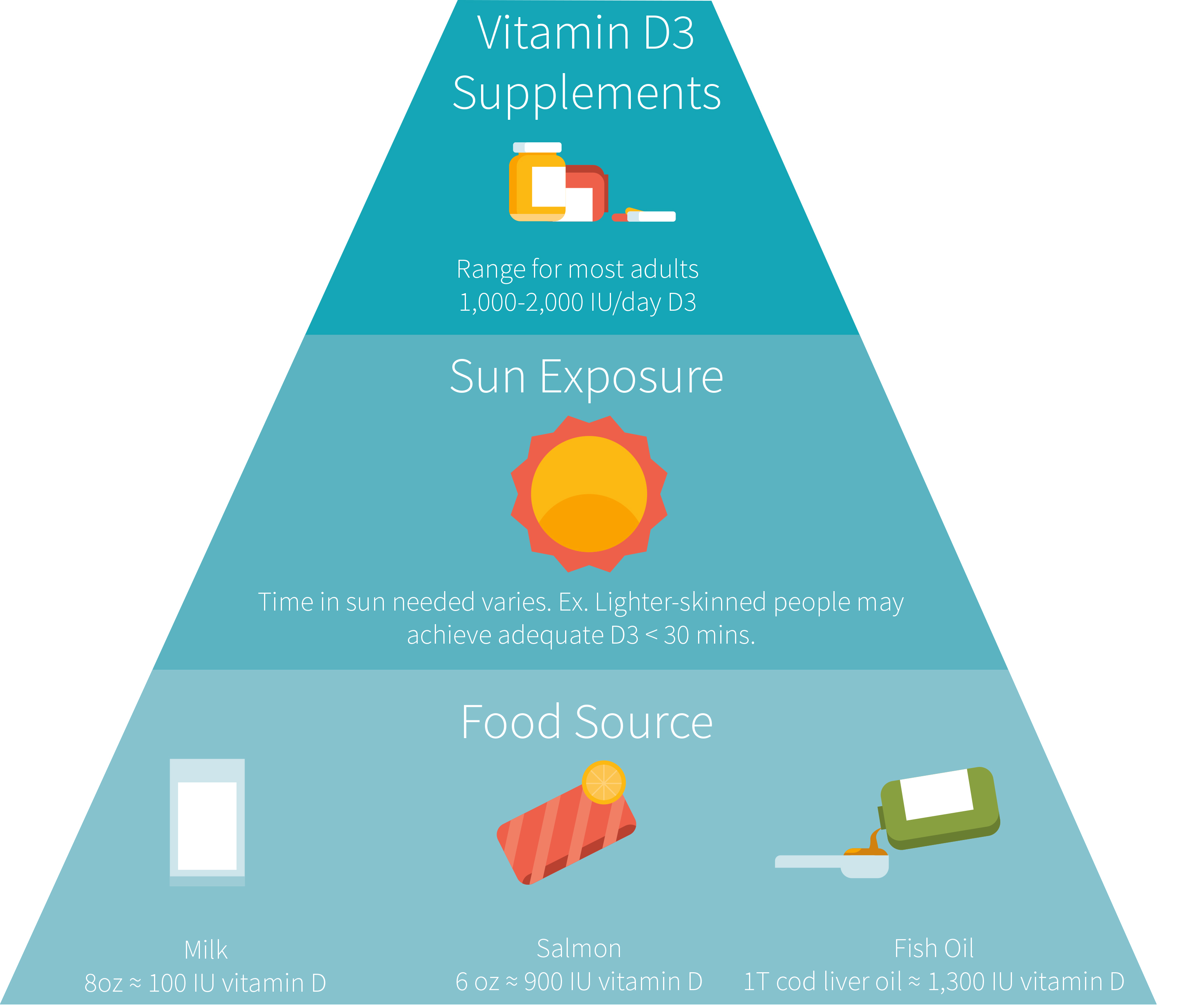
        It has been estimated that roughly one billion [5] people worldwide are vitamin D deficient, including 41.6% [6] of Americans. It is tempting to believe that current dietary recommendations are to blame, considering that the study at hand suggested they may significantly underestimate actual requirements due to the choice of statistical method used. However, average vitamin D intake levels from foods and supplements (outlined in Figure 2) have a combined range from around 200 to 400 IU per day [7] among Americans aged 1-70 years, which is well below the current RDA of 600 IU.

        Figure 2: Figure 2: Different sources of vitamin D

        This discussion centers around preventing vitamin D deficiency, but there is an abundance of literature suggesting that higher levels are required to derive full biological activity of vitamin D. The Endocrine Society [2] has suggested that 25(OH)D levels between 30 and 40 ng/mL are ideal and even classified the non-deficient range of 20-30 ng/mL as "insufficient." As discussed in ERD #7, Putting the 'D' in Death, observational research suggests that the lowest levels of cardiovascular and all-cause mortality occur around the 30-40 ng/mL range.

        Getting people to obtain enough vitamin D, be it naturally or through the diet, is a global challenge with widespread potential for affecting health, considering vitamin D has been implicated [8] in numerous chronic diseases and adverse health conditions, including depression, infections, asthma, hypertension, cardiovascular diseases, autoimmune diseases, muscle weakness, osteoporosis, and cancers. Yet, if people struggle to obtain the current RDA for vitamin D, then acknowledging that it may be underestimated paints a bleaker picture. Certainly, a greater effort to educate the population about the importance of vitamin D and sun exposure will be necessary.

        One billion people worldwide and 40% of the US population are vitamin D deficient, with the clear majority struggling to meet the current RDA for vitamin D intake. Acknowledging that the current RDA may be underestimated only serves to emphasize the importance of increased public education about vitamin D and sun exposure. Moreover, optimal health may well necessitate a vitamin D status 1.5 to 2 times greater than the current goal of 20 ng/mL, although there is still uncertainty about what constitutes "optimal" levels.

        Frequently Asked Questions

        Q. Are vitamin D requirements different when supplementing vitamin D2?

        A meta-analysis [9] of randomized controlled trials comparing the two found that vitamin D3 was more effective at raising serum 25(OH)D levels than vitamin D2. However, there were significant between-study differences that could not be explored because of the sparse number of included trials (a mere seven). Additionally, when trials were analyzed according to their dosing regimen, vitamin D3 was shown to be superior to D2 only when supplemented as an infrequent bolus and not when supplemented daily.

        More recently, a randomized controlled trial [10] set out to determine the mediating variables of effective vitamin D2 and D3 supplementation. This rather large study of 279 adults randomized to eight different supplement regimens showed that vitamin D3 was less effective than D2 at raising 25(OH)D levels when supplemented daily but more effective when supplemented as a bolus two or four times per week. Together, these studies suggest that requirements may differ depending on the type of vitamin D being supplemented. Vitamin D3 is most effective at raising 25(OH)D when consumed in less frequent, larger doses while vitamin D2 is best taken in smaller daily allotments. Still, one could simply adjust the dose to fit whatever supplement timing protocol they prefer and can stick with.

        What should I know?

        The National Academies of Sciences used a standard meta-regression analysis of several large randomized controlled trials to determine the RDA for vitamin D. A standard meta-regression relies exclusively on the averages of individuals from each treatment arm rather than on the data of each individual, meaning that they can account for between-study variability but not between-people variability. Using individual participant data (IPD) instead of group averages is considered the gold standard when aggregating data because it incorporates between-people variability, minimizes publication and reporting biases, and allows for detailed data checking and verification.

        The study under review sought to compare the vitamin D RDA obtained when analyzing the same dataset using both standard and IPD meta-regression analyses. Based on seven randomized controlled trials and 882 participants, the IPD analysis resulted in an RDA that was 84% greater than that obtained with the standard meta-regression (1044 vs. 568 IU to prevent deficiency in 97.5% of the population). The findings of this study underscore the importance of the source of data being analyzed and suggest that the currently established RDA of 600 IU may be grossly underestimated.

        You are reading a free Examine article. Become a Member to get full access to all our articles and stay on top of the latest research.

        See other articles with similar topics: Vitamin D.

        See other articles in Issue #32 (June 2017) of Study Deep Dives.

        Other Articles in Issue #32 (June 2017)

        • Another look at the diet-heart hypothesis

          When you replace saturated fat with polyunsaturated fat, some studies suggest that good things should happen. But there's more than one way to interpret the available studies.

        • Can chondroitin save knee cartilage?

          Chondroitin's mixed results for slowing the progression of osteoarthritis may be due to the low-quality or lower-dose chondroitin used in some studies. Looking at the structural effects of higher-dose, pharmaceutical-grade chondroitin could shed more light on its efficacy

        • Protein, fast and slow

          Fast-digesting whey helps with post-workout muscle protein synthesis, and some studies suggest slower-digesting casein reduces muscle protein breakdown. This opens the possibility that their combination could be better than either alone

        • Timing protein before bed for gains

          Sleep is one big fast, which could put muscles' protein balance into the red. Could taking slow-acting casein before bed put the balance back into the black overnight?

        • Interview: Matthew Dalby, PhD

          Dr. Dalby's research explores the links between diet, obesity, and the microbiome. In this interview, we discuss fecal transplants, the role of animal models in research, and more.

        • Better performance with nitrate supplementation?

          Nitrates are one of the few supplements that consistently show promise for athletic performance. But should you take them acutely or chronically for best effect?

        • Interview: Kenneth Brown, MD

          Dr. Brown is an accomplished gastroenterologist who has conducted clinical trials on supplements and drugs for GI conditions. We pick his brain here

        References

        1. ^ a b . Dietary Reference Intakes for Calcium and Vitamin D - Chapter: 5 Dietary Reference Intakes for Adequacy: Calcium and Vitamin D. The National Academies of Sciences Engineering and Medicine. (2011)
        2. ^ a b Holick MF, et al. Evaluation, treatment, and prevention of vitamin D deficiency: an Endocrine Society clinical practice guideline. J Clin Endocrinol Metab. (2011)
        3. ^ Gavin B Stewart, et al. Statistical analysis of individual participant data meta-analyses: a comparison of methods and recommendations for practice. PLoS One. (2012)
        4. ^ Matsuoka LY, et al. Sunscreens suppress cutaneous vitamin D3 synthesis. J Clin Endocrinol Metab. (1987)
        5. ^ Matthias Wacker, Michael F Holick. Vitamin D - effects on skeletal and extraskeletal health and the need for supplementation. Nutrients. (2013)
        6. ^ Forrest KY, Stuhldreher WL. Prevalence and correlates of vitamin D deficiency in US adults. Nutr Res. (2011)
        7. ^ Bailey RL, et al. Estimation of total usual calcium and vitamin D intakes in the United States. J Nutr. (2010)
        8. ^ Michael F Holick. Vitamin D: evolutionary, physiological and health perspectives. Curr Drug Targets. (2011)
        9. ^ Tripkovic L, et al. Comparison of vitamin D2 and vitamin D3 supplementation in raising serum 25-hydroxyvitamin D status: a systematic review and meta-analysis. Am J Clin Nutr. (2012)
        10. ^ Muhammad M Hammami, Ahmed Yusuf. Differential effects of vitamin D2 and D3 supplements on 25-hydroxyvitamin D level are dose, sex, and time dependent: a randomized controlled trial. BMC Endocr Disord. (2017)

        Nature's Measure Vitamin D 400 Iu Review

        Source: https://examine.com/members/deep-dives/article/should-1000-iu-be-the-new-rda-for-vitamin-d/

        Share:

        Low Vitamin D Levels And Fatigue

        Low Vitamin D Levels And Fatigue

        Many cases of leukemia across the globe may be caused by vitamin D deficiency as a result of low sunlight exposure. This is the conclusion of a new study published in PLOS One.

        [Vitamin D sources on a notepad] Share on Pinterest
        Researchers suggest low vitamin D levels, mediated by low UVB exposure, may be responsible for many leukemia cases worldwide.

        Leukemia is a cancer of the blood cells, most commonly affecting the white blood cells, or leukocytes, that help fight infection.

        There were around 352,000 new cases of leukemia diagnosed worldwide in 2012, and last year, more than 54,000 cases of the cancer were diagnosed in the US alone.

        While scientists are still unsure of the exact causes of leukemia, genetic and environmental factors are thought to play a role.

        A number of studies have shown that vitamin D metabolites in the blood – known as 25-hydroxyvitamin D, or 25(OH)D, which is an indicator of the body's vitamin D levels – interact with acute myeloid leukemia (AML) cells. What is more, some studies have identified low vitamin D levels in patients with AML.

        While vitamin D is found in some foods, including oily fish, cheese and egg yolks, it is present in small amounts. The body's best source of vitamin D is sunlight; ultraviolet B (UVB) radiation from the sun penetrates bare skin, inducing vitamin D synthesis.

        In this latest study, coauthor Cedric Garland, adjunct professor in the Department of Family Medicine and Public Health at the University of California-San Diego, and colleagues set out to investigate whether low UVB exposure and low vitamin D levels are associated with leukemia risk.

        Garland and colleagues analyzed data from the International Agency for Cancer Research's (IARC) Global Cancer (GLOBOCAN) 2012 database.

        Fast facts about leukemia

        • Leukemia accounted for around 3.3% of all new cancer cases in the US last year
        • Around 1.5% of men and women in the US will be diagnosed with leukemia at some point in their lives
        • Around 58.5% of people with leukemia survive 5 years or more after diagnosis.

        Learn more about leukemia

        The team looked at the age-adjusted leukemia incidence rates for 172 countries, and the cloud cover-adjusted UVB irradiance for each country was assessed using data from the International Satellite Cloud Climatology Project.

        The researchers found that individuals living in countries farther away from the equator, such as the US, Australia, New Zealand, Canada and Ireland, were at least twice as likely to have leukemia as people living in countries closes to the equator, such as Nigeria, Bolivia, Samoa and Madagascar.

        The association remained after accounting for sex-specific life expectancy and altitude, according to the authors.

        The team explains that individuals who live farther away from the equator are exposed to solar energy that has traveled farther through the Earth's atmosphere, which reduces the amount of UVB radiation that reaches the skin.

        As such, the researchers say it is "plausible" that much of the leukemia burden across the globe is a result of low vitamin D levels caused by low UVB exposure.

        "Skin photosynthesis accounts for a large proportion of 25(OH)D concentration. As a result, the inverse association between cloud-adjusted solar UVB exposure and incidence rates is likely to be mediated by circulating 25(OH)D, which is highly dependent on solar UVB irradiance," they explain, adding:

        "Importantly, these results suggest that increased levels of UVB irradiance and vitamin D may help prevent development of leukemia."

        While the team says some key strengths of their study are the inclusion of thousands of leukemia cases from hundreds of countries and the fact the findings are consistent with results from previous studies, they admit there are some limitations.

        For example, they were unable to control for other factors that may fuel differences in leukemia risk between countries. "Some of these confounders may be very influential on risk for leukemia," they note.

        Still, Garland and colleagues believe the association between low UVB exposure, low vitamin D levels and leukemia warrants further investigation.

        While vitamin D deficiency has been linked to a number of health problems, a recent study reported by Medical News Today suggests higher monthly doses of the vitamin may increase the risk of falls among seniors.

        Low Vitamin D Levels And Fatigue

        Source: https://www.medicalnewstoday.com/articles/304797

        Share:

        Blog Archive

        banner